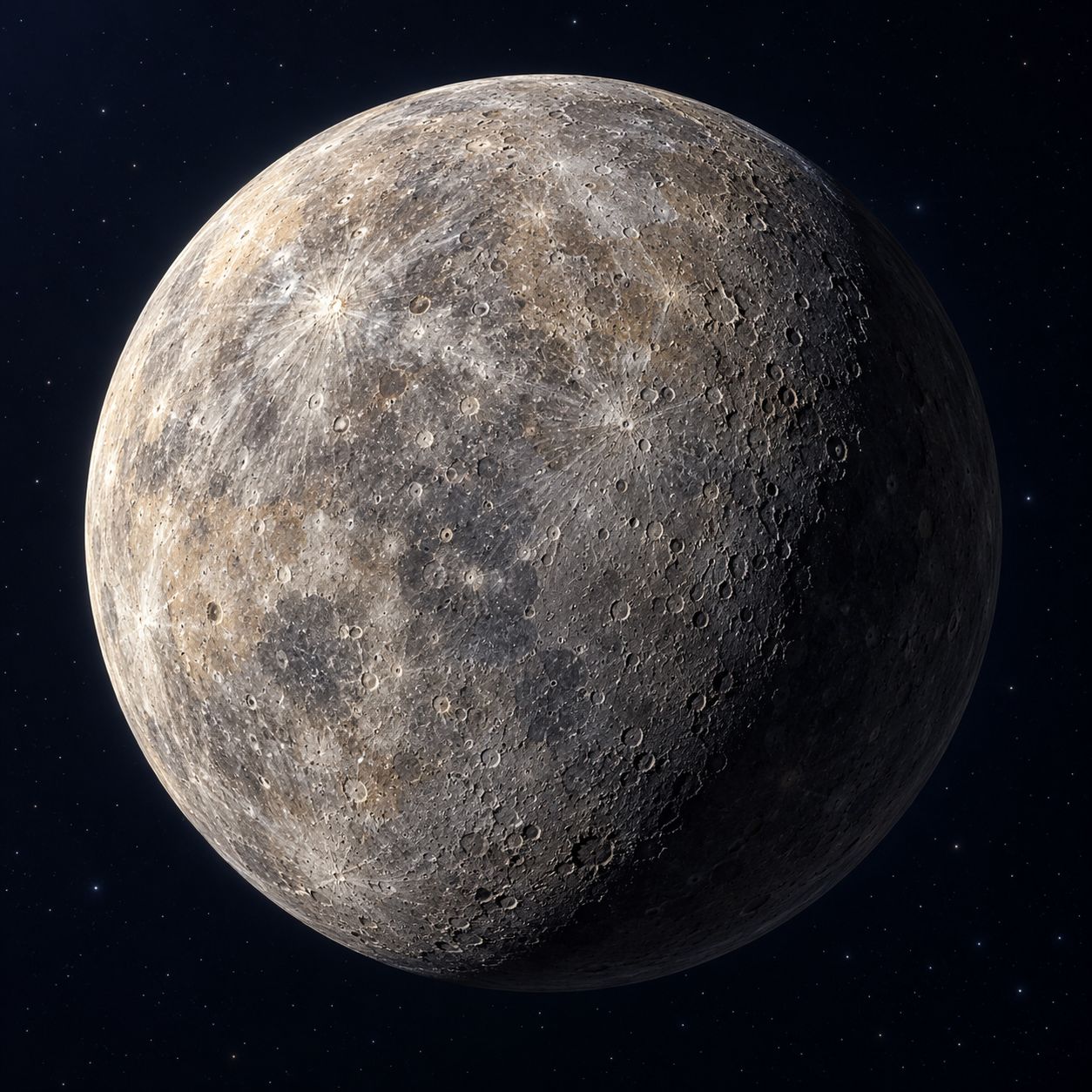
planet · Terrestrial Planet
Mercury is the smallest planet and the closest to the Sun. Its heavily cratered surface preserves a long record of impacts and extreme temperature changes.
- Mean radius (km)
- 2439.4
- Orbital period (days)
- 87.969257175
Explore Mercury · View in 3D Solar System
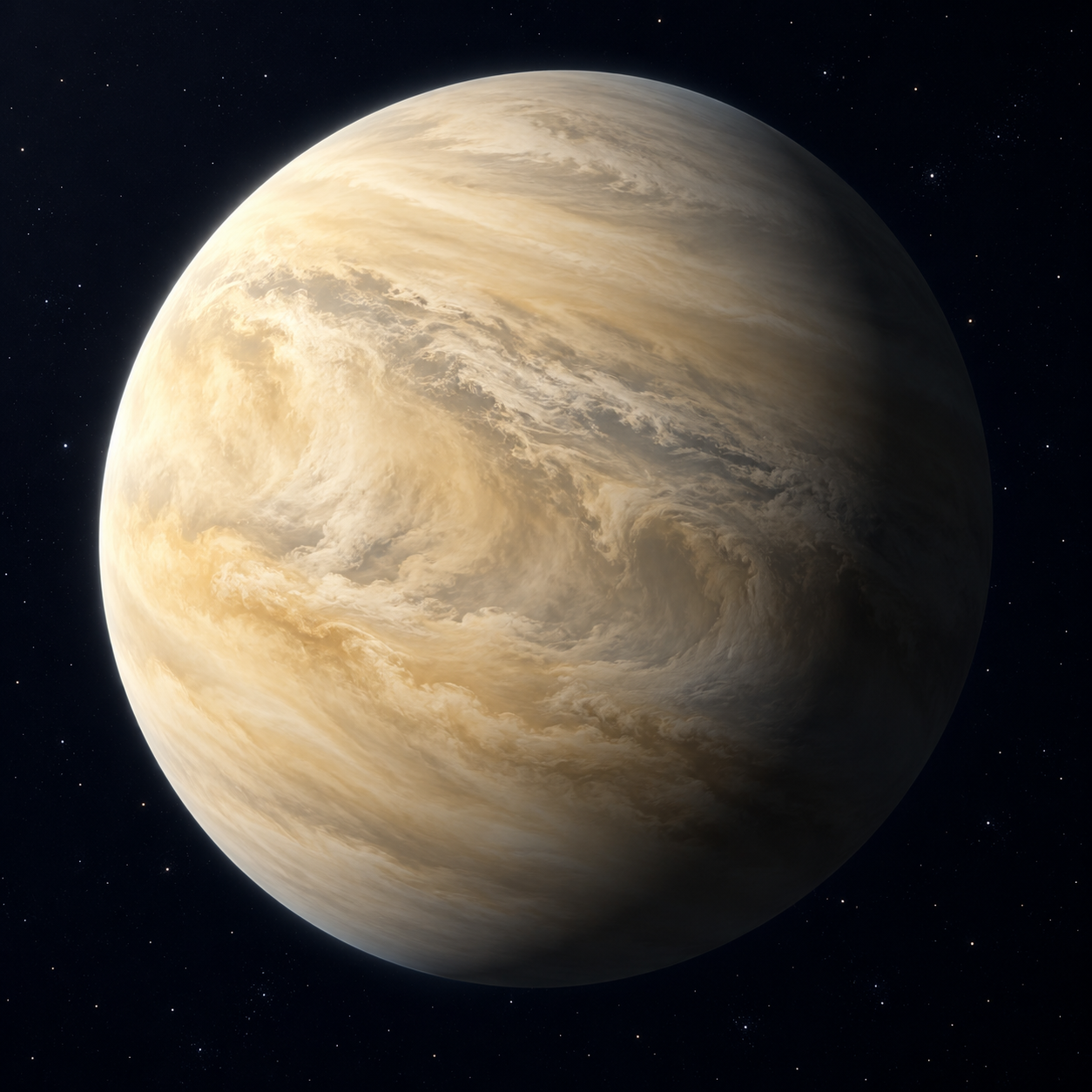
planet · Terrestrial Planet
Venus is Earth-sized but has a radically different climate: a dense carbon-dioxide atmosphere and runaway greenhouse heating make its surface the hottest of any planet.
- Mean radius (km)
- 6051.8
- Orbital period (days)
- 224.700799215
Explore Venus · View in 3D Solar System

planet · Terrestrial Planet
Earth is the only world currently known to support life. Its liquid surface oceans, active geology and atmosphere make it the reference world for planetary habitability studies.
- Mean radius (km)
- 6371.0084
- Orbital period (days)
- 365.25635535
Explore Earth · View in 3D Solar System
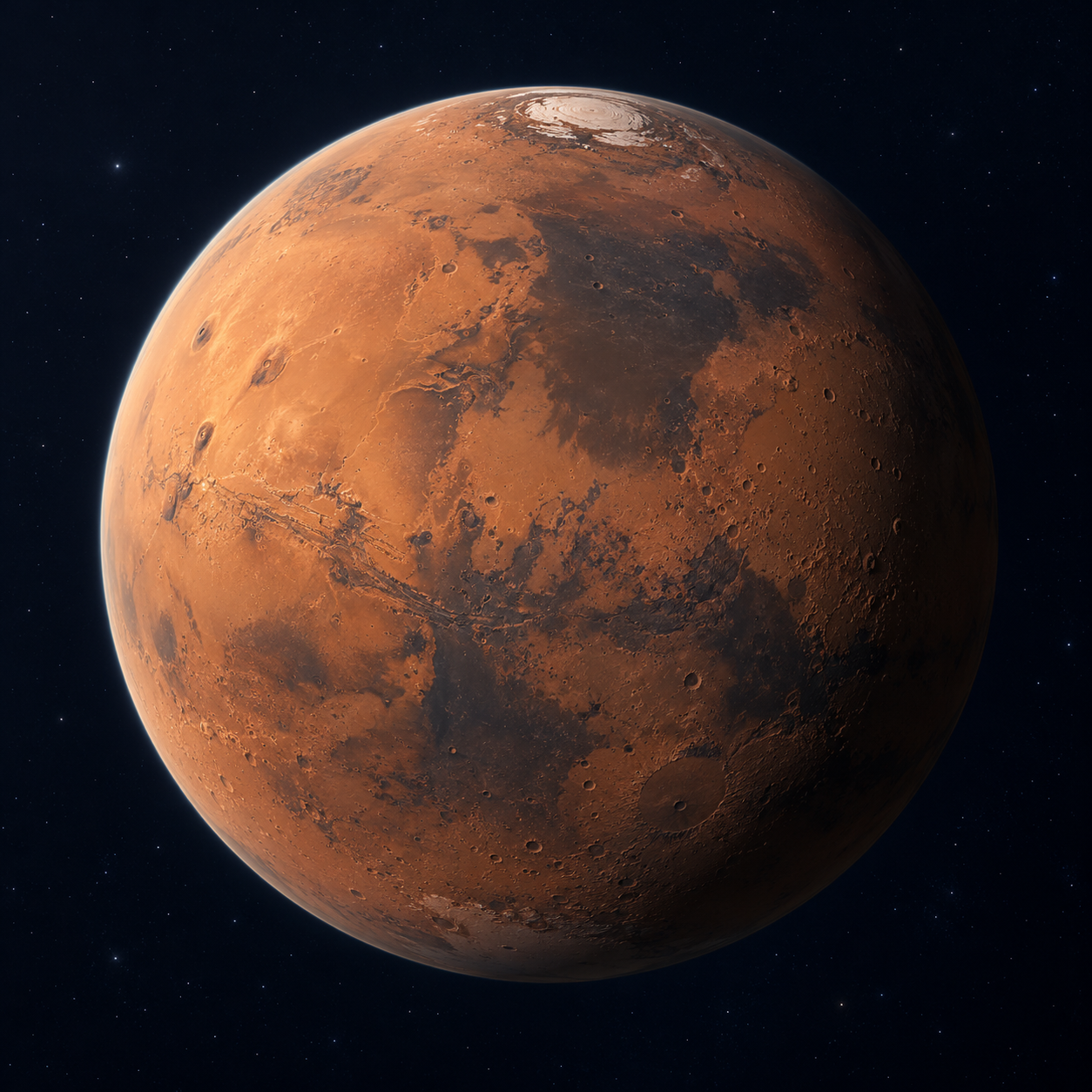
planet · Terrestrial Planet
Mars preserves evidence of a wetter ancient environment, including dried river channels, lake basins and minerals formed in water. It is one of the most extensively explored worlds
- Mean radius (km)
- 3389.5
- Orbital period (days)
- 686.9795859000001
Explore Mars · View in 3D Solar System
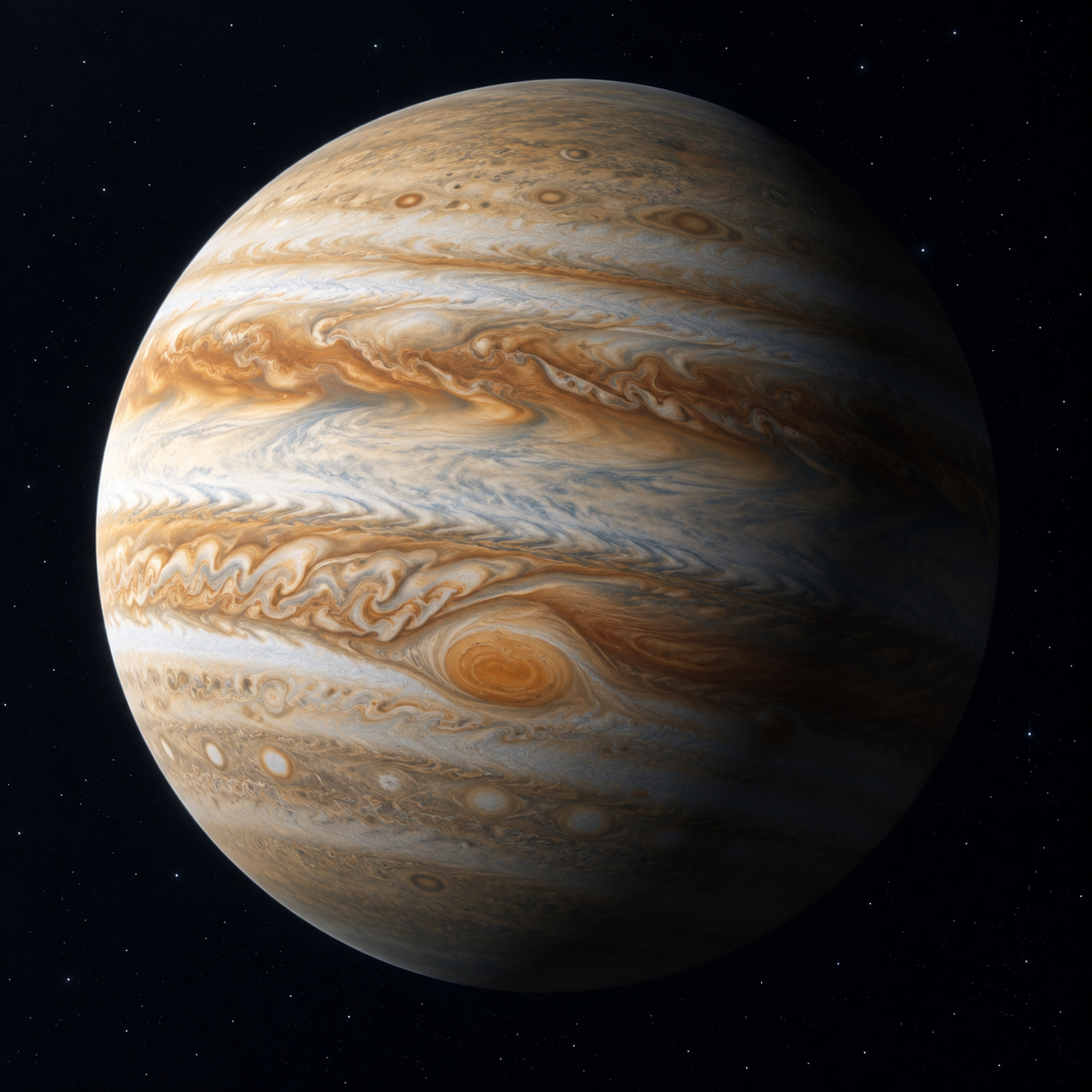
planet · Gas Giant
Jupiter is the largest planet and a natural laboratory for giant-planet physics. Its enormous magnetic environment and changing atmosphere have been studied by successive spacecraf
- Mean radius (km)
- 69911
- Orbital period (days)
- 4332.82012875
Explore Jupiter · View in 3D Solar System
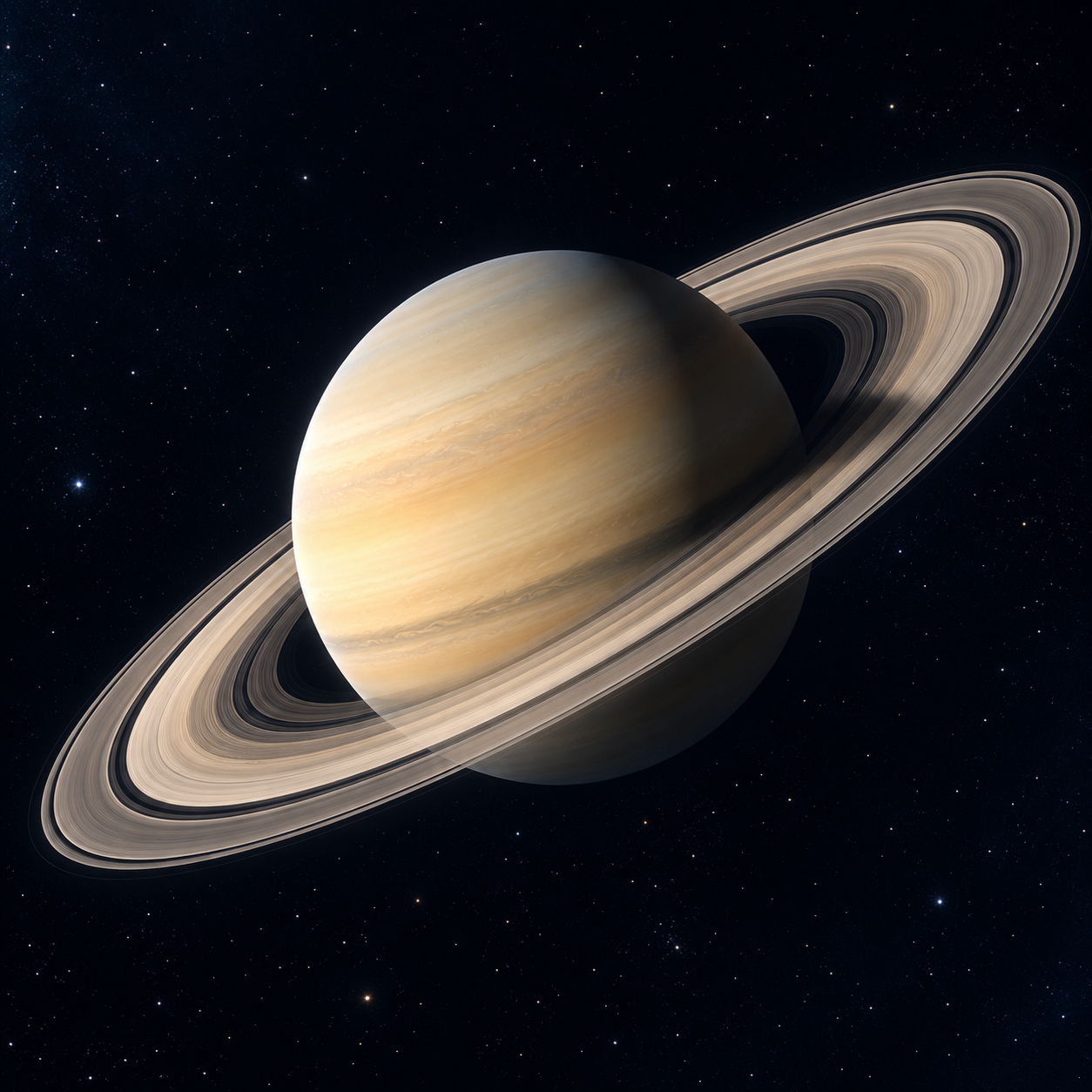
planet · Gas Giant
Saturn is famous for its extensive ring system, whose countless ice-rich particles orbit individually. The Cassini mission transformed our understanding of Saturn, its rings and it
- Mean radius (km)
- 58232
- Orbital period (days)
- 10755.6986445
Explore Saturn · View in 3D Solar System
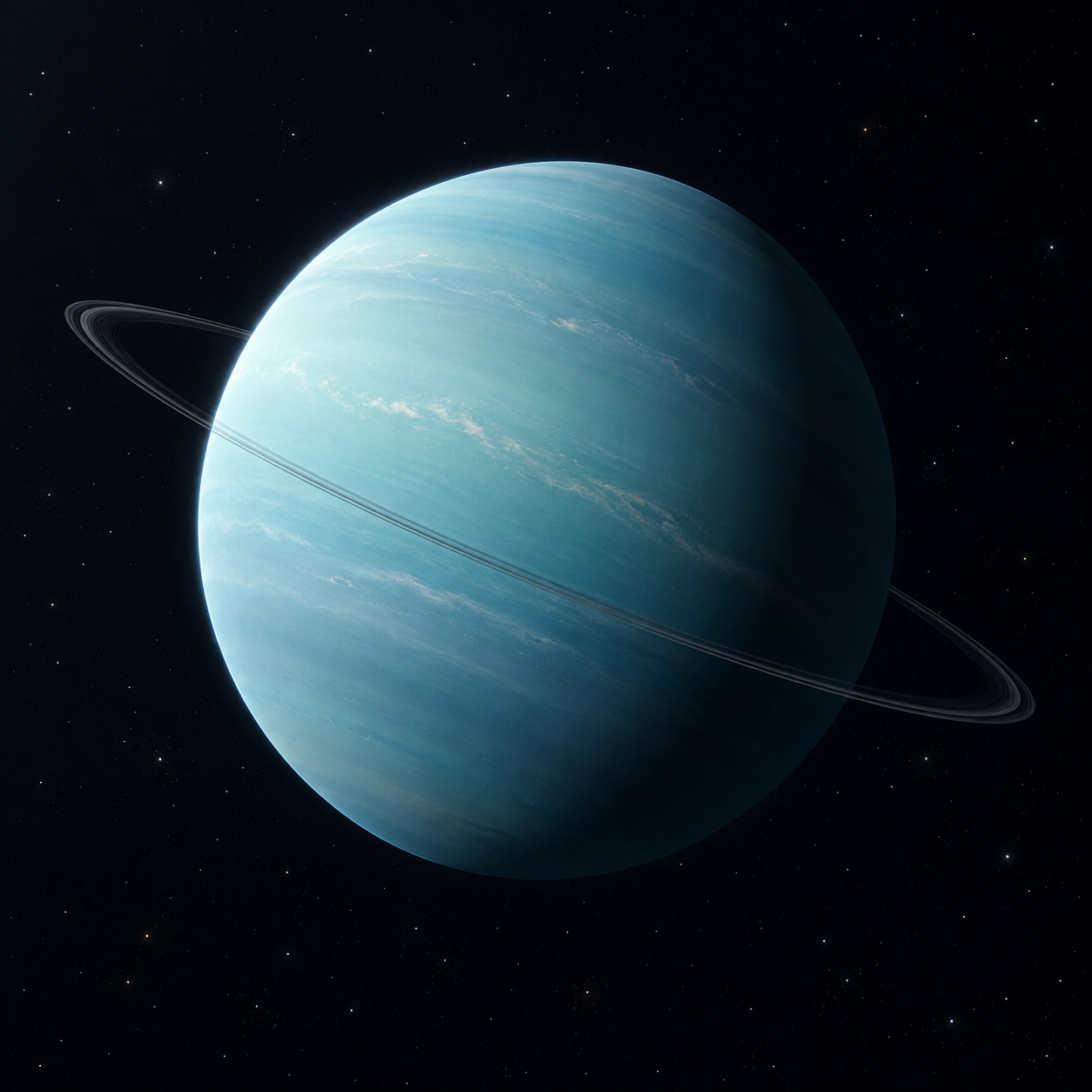
planet · Ice Giant
Uranus rotates with an extreme axial tilt, producing unusual seasonal geometry. Its faint rings and diverse moons make it an important comparative giant-planet system.
- Mean radius (km)
- 25362
- Orbital period (days)
- 30687.1530015
Explore Uranus · View in 3D Solar System
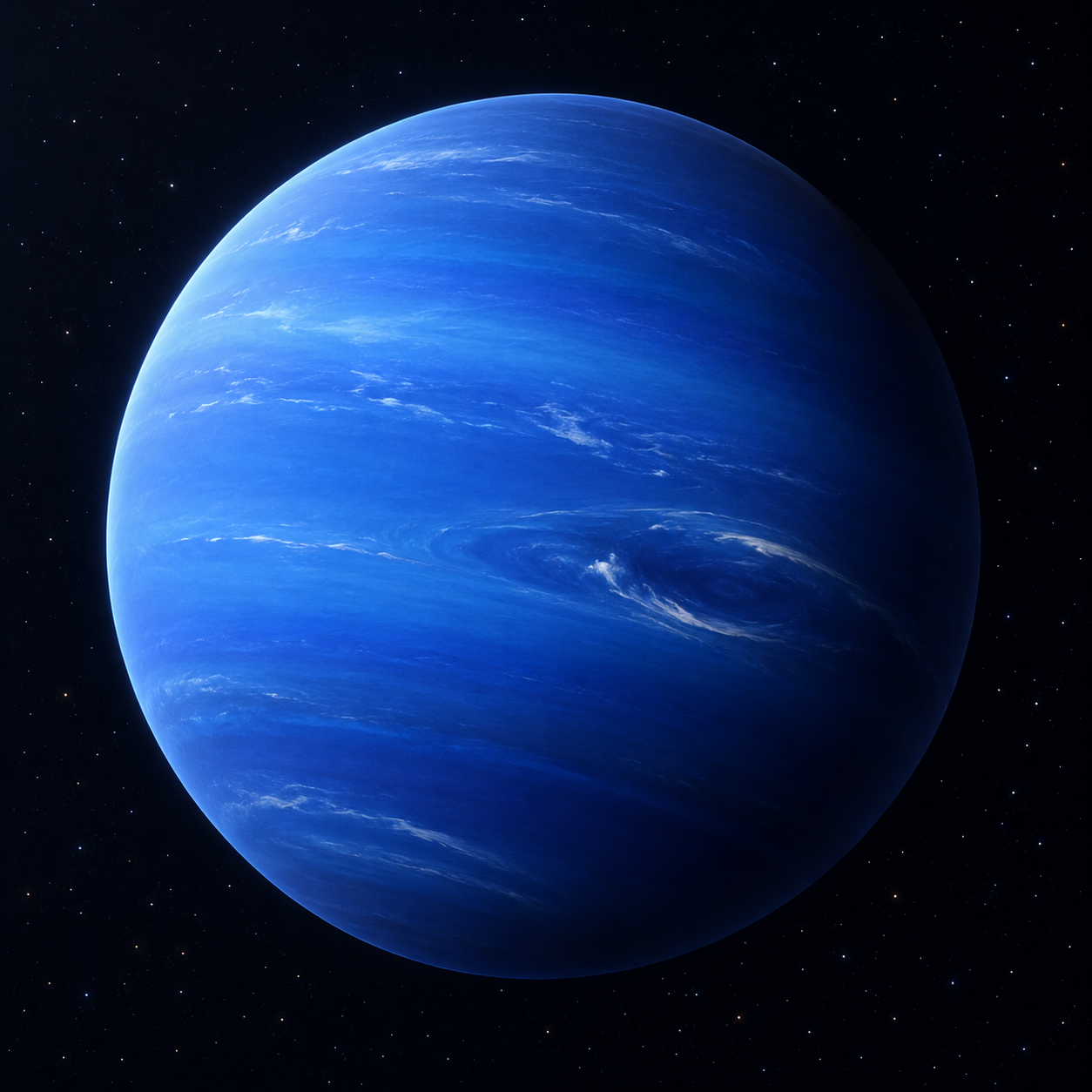
planet · Ice Giant
Neptune is the most distant of the eight planets and has some of the fastest winds measured in the Solar System. Voyager 2 remains the only spacecraft to have visited it closely.
- Mean radius (km)
- 24622
- Orbital period (days)
- 60190.029630000005
Explore Neptune · View in 3D Solar System
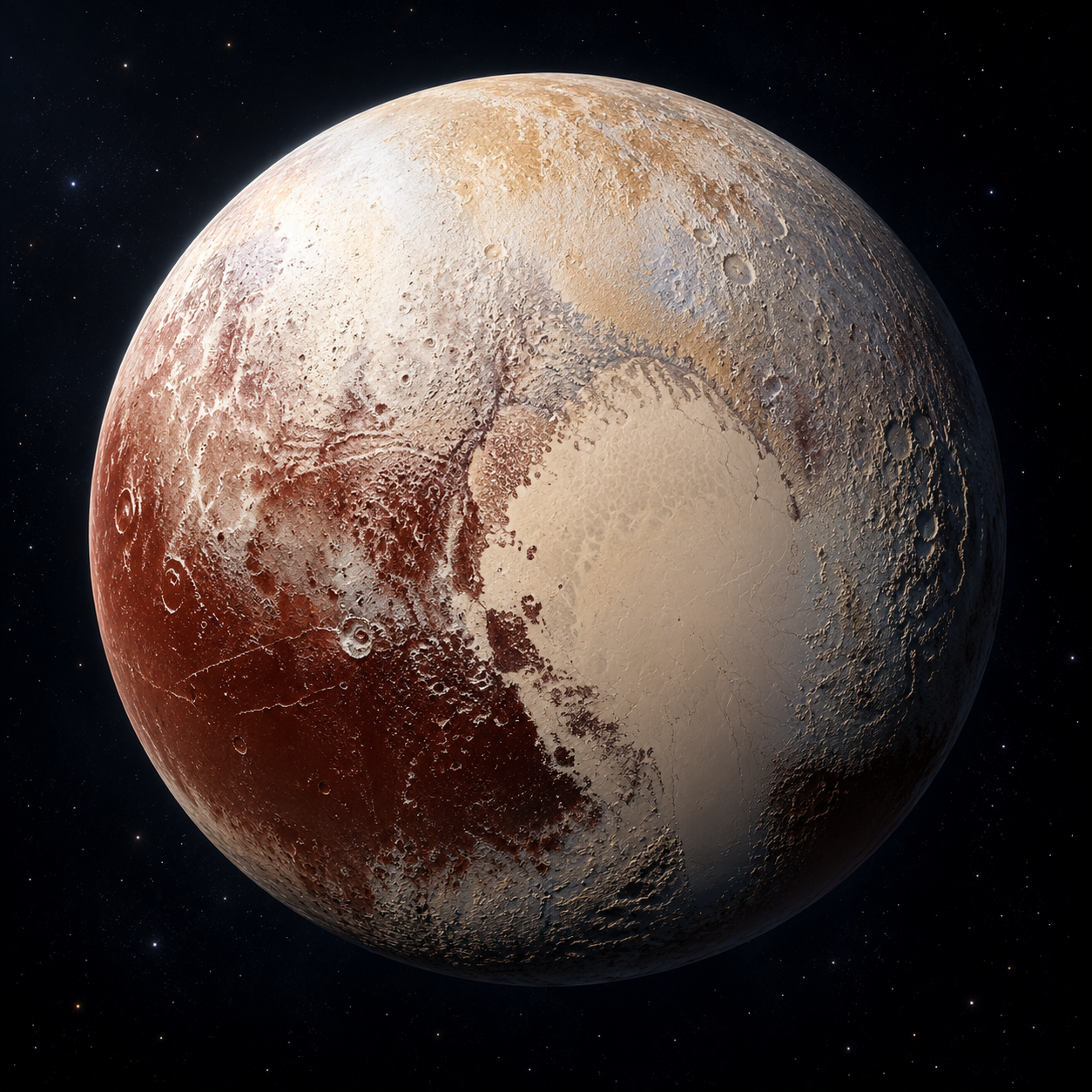
dwarf planet · Sun
Pluto became a major scientific landmark when New Horizons returned the first close images in 2015, revealing mountains of water ice, nitrogen glaciers and a complex atmosphere.
Explore Pluto · View in 3D Solar System
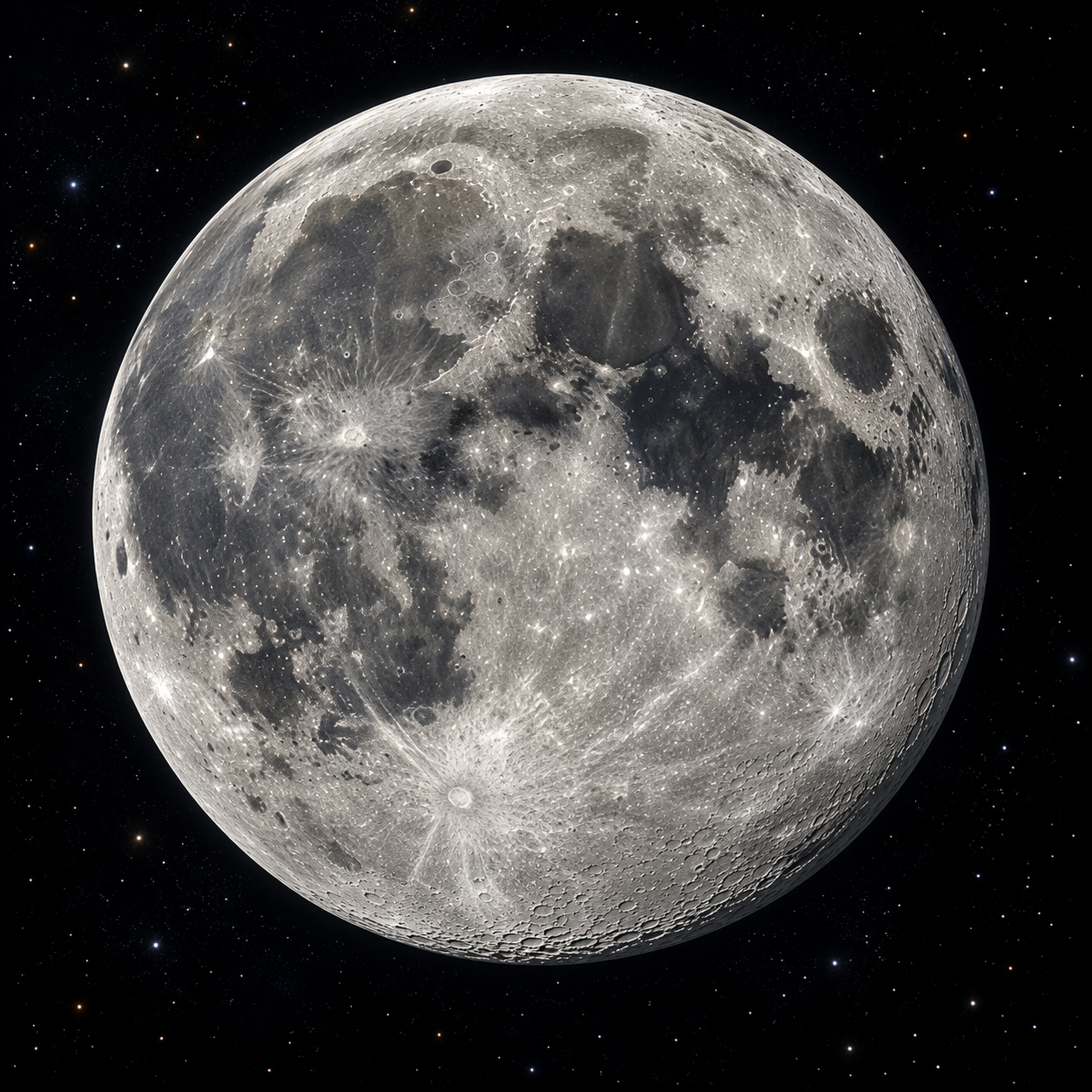
moon · Earth
Earth’s Moon is the only extraterrestrial body humans have walked on. Apollo samples and modern orbital missions have made it a benchmark for studying planetary formation, impacts
- Mean radius (km)
- 1737.4
- Orbital period (days)
- 27.322
Explore Moon [Earth] · View in 3D Solar System
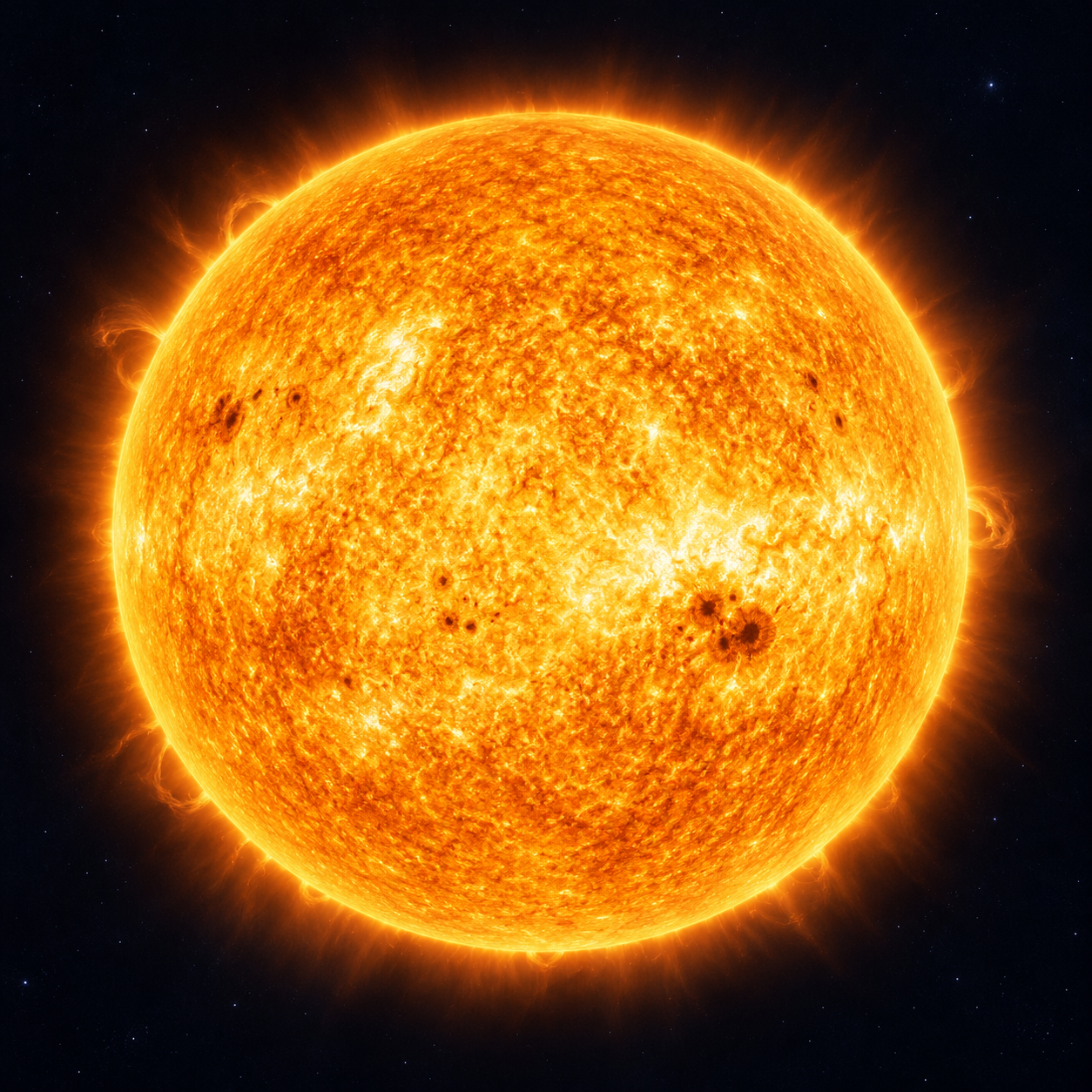
star
The Sun is the star at the centre of our planetary system and contains almost all of its mass. Its magnetic activity drives the solar wind and much of the space weather that reache
Explore Sun · View in 3D Solar System
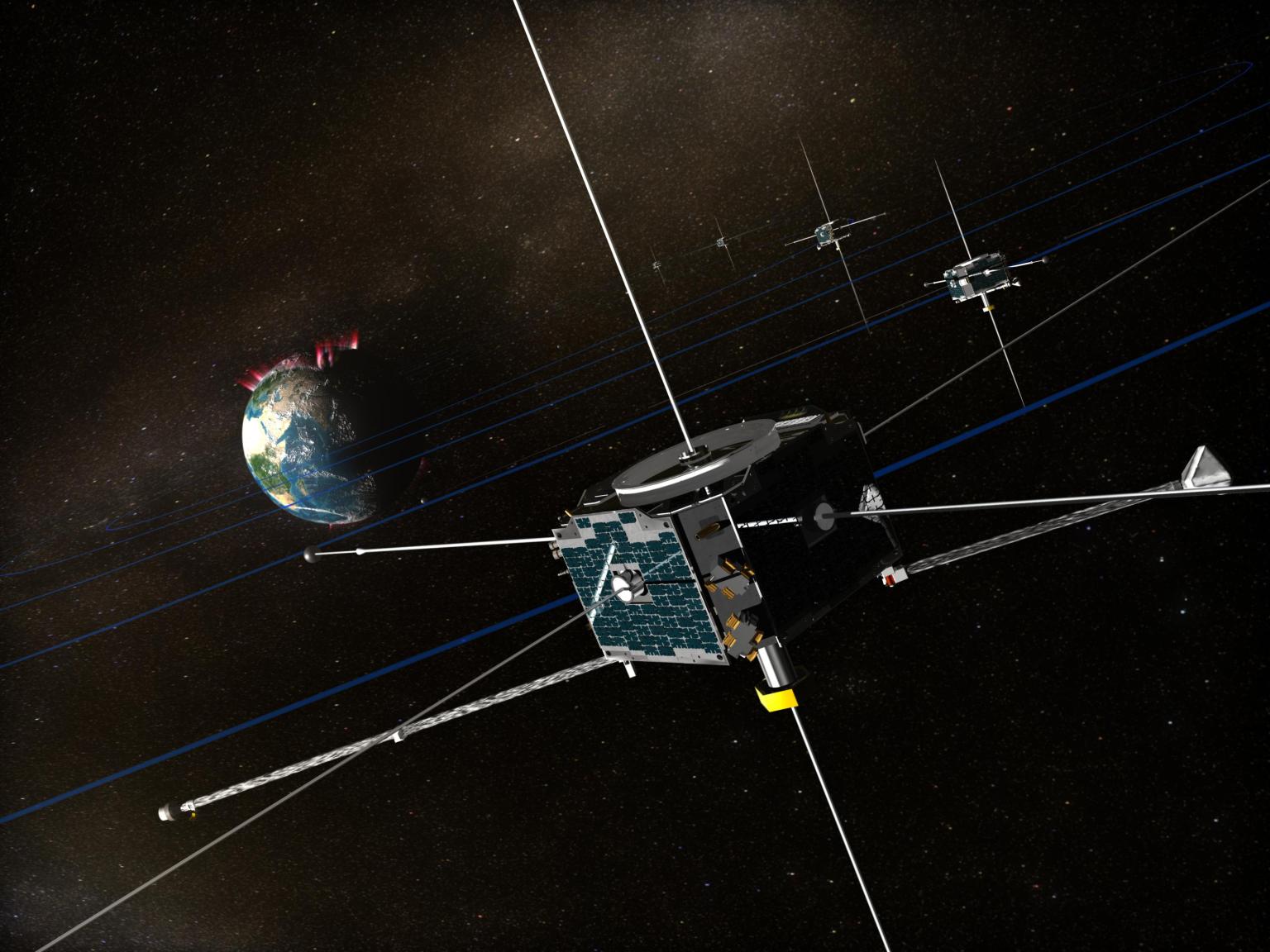
spacecraft · NASA / University of California, Berkeley
A repurposed THEMIS probe studying the Moon’s plasma environment.
- Launch date
- 2007-02-17
- Days since launch
- 7200
Explore ARTEMIS P1 · View in 3D Solar System
spacecraft · NASA / University of California, Berkeley
A repurposed THEMIS probe studying the Moon’s plasma environment.
- Launch date
- 2007-02-17
- Days since launch
- 7200
Explore ARTEMIS P2 · View in 3D Solar System
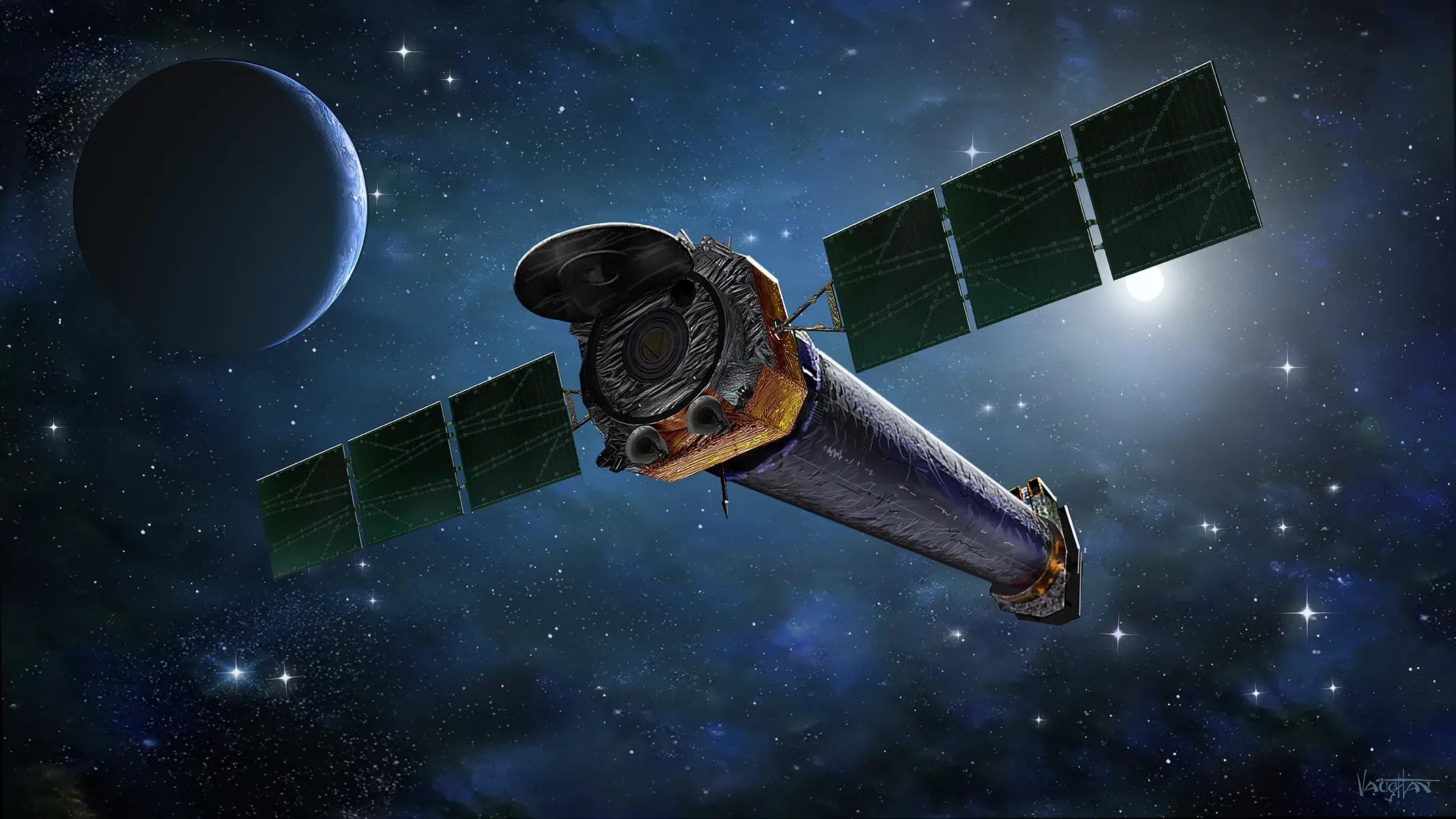
spacecraft · NASA
Studies high-energy astronomical sources from Earth orbit.
Explore Chandra X-ray Observatory · View in 3D Solar System
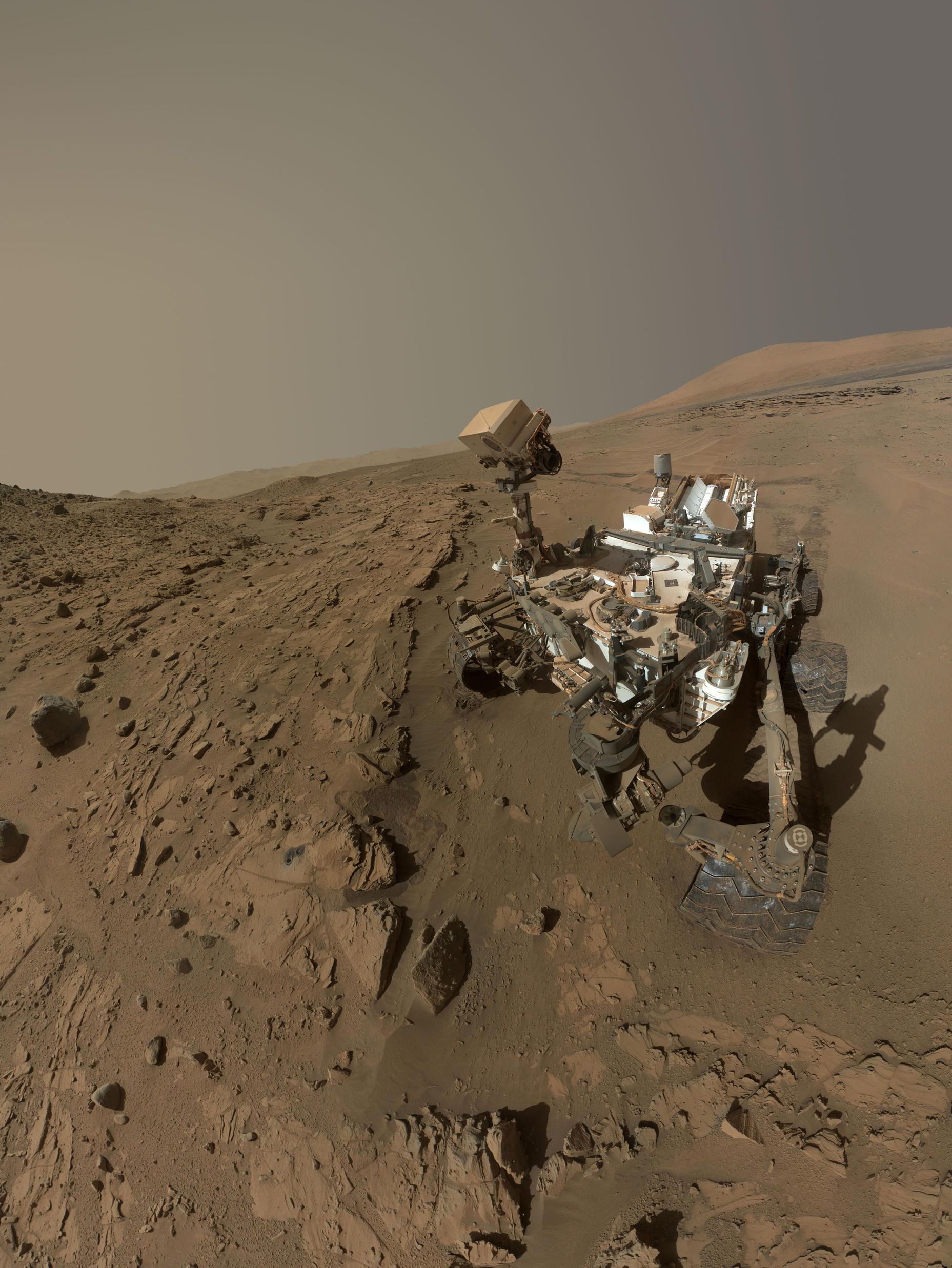
spacecraft · NASA / Jet Propulsion Laboratory
Investigates whether ancient Mars had conditions suitable for microbial life.
- Launch date
- 2011-11-26
- Days since launch
- 5457
Explore Curiosity Rover · View in 3D Solar System
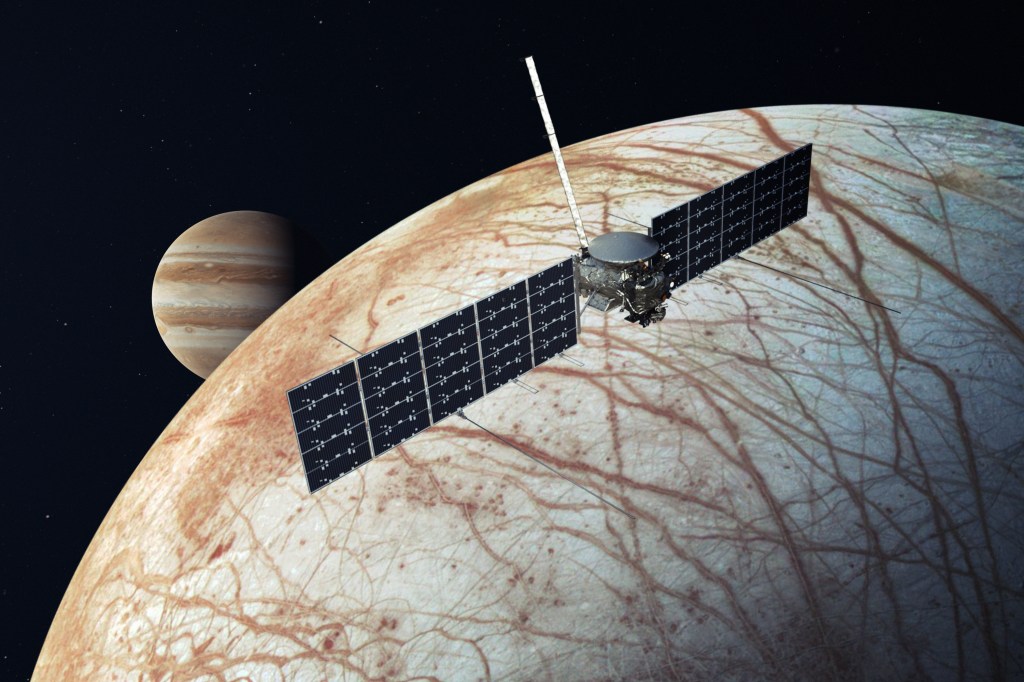
spacecraft · NASA / Jet Propulsion Laboratory
Designed to investigate Europa’s ice shell, ocean and potential habitability.
- Launch date
- 2024-10-14
- Days since launch
- 751
Explore Europa Clipper · View in 3D Solar System

spacecraft · NASA / European Space Agency
Observes astronomical objects from Earth orbit.
- Launch date
- 1990-04-24
- Days since launch
- 13343
Explore Hubble Space Telescope · View in 3D Solar System

spacecraft · NASA / European Space Agency / Canadian Space Agency
Observes the early Universe, galaxies, stars and planets from the Sun–Earth L2 region.
Explore James Webb Space Telescope · View in 3D Solar System
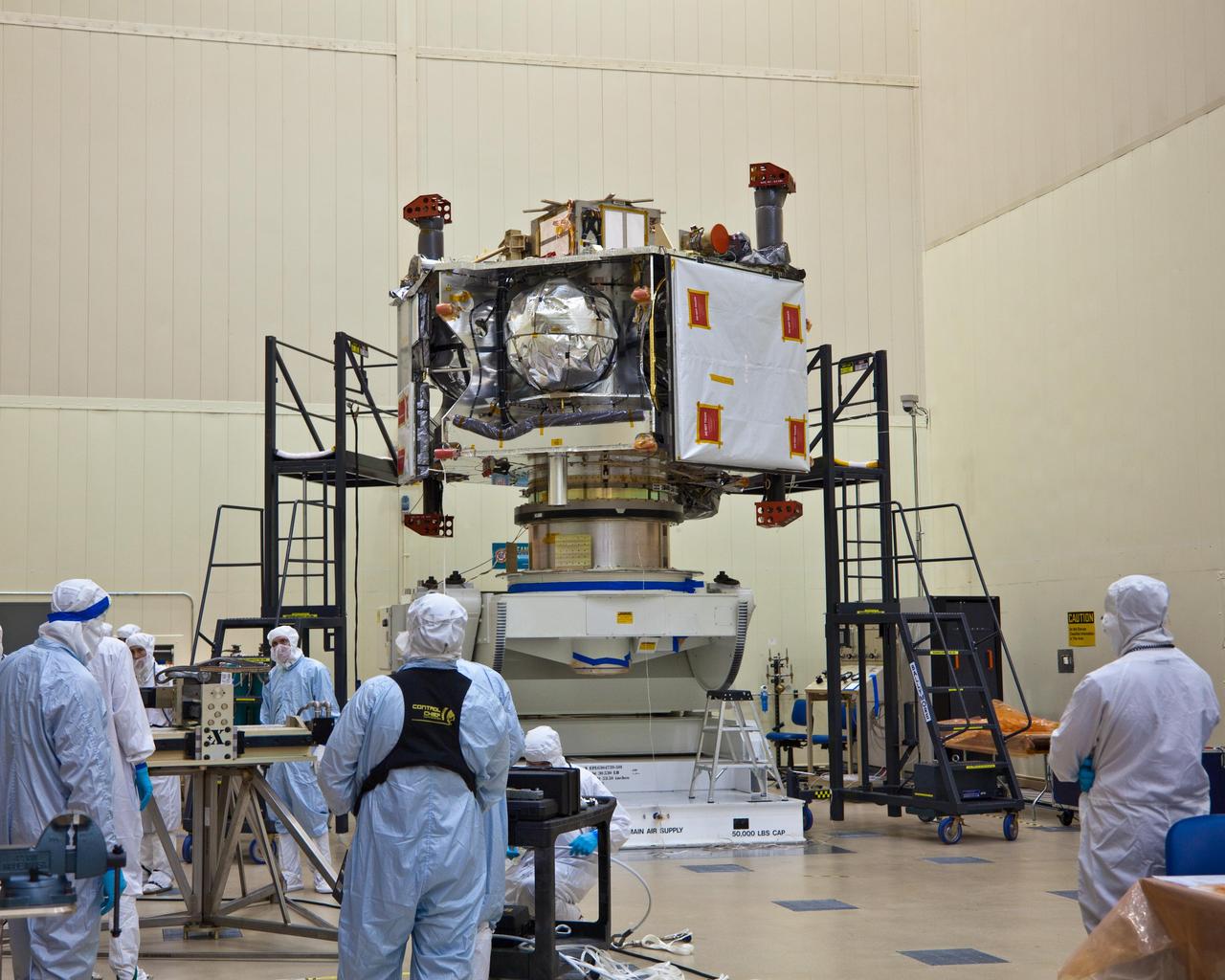
spacecraft · NASA / Jet Propulsion Laboratory
Studies Jupiter’s atmosphere, interior, magnetic field, moons and rings. Its highly elliptical polar orbit changed through the mission; NASA records a 33-day final orbital period a
- Launch date
- 2011-08-05
- Days since launch
- 5570
Explore Juno · View in 3D Solar System
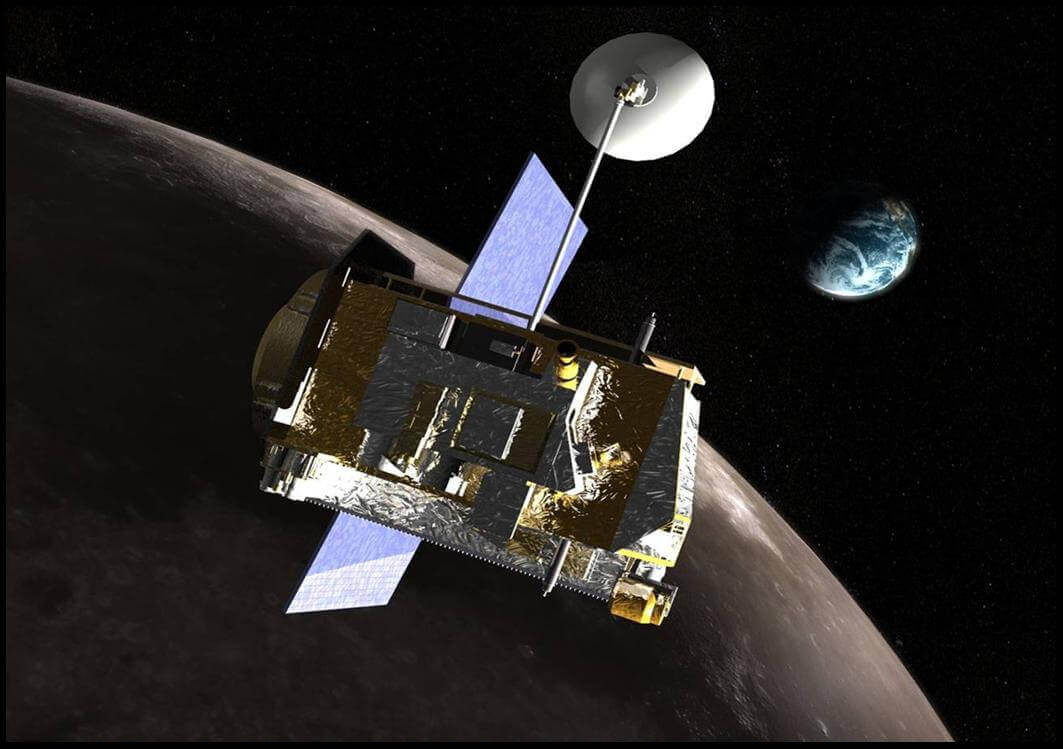
spacecraft · NASA
Maps the Moon and gathers information for lunar science and exploration.
- Launch date
- 2009-06-18
- Days since launch
- 6348
Explore Lunar Reconnaissance Orbiter · View in 3D Solar System
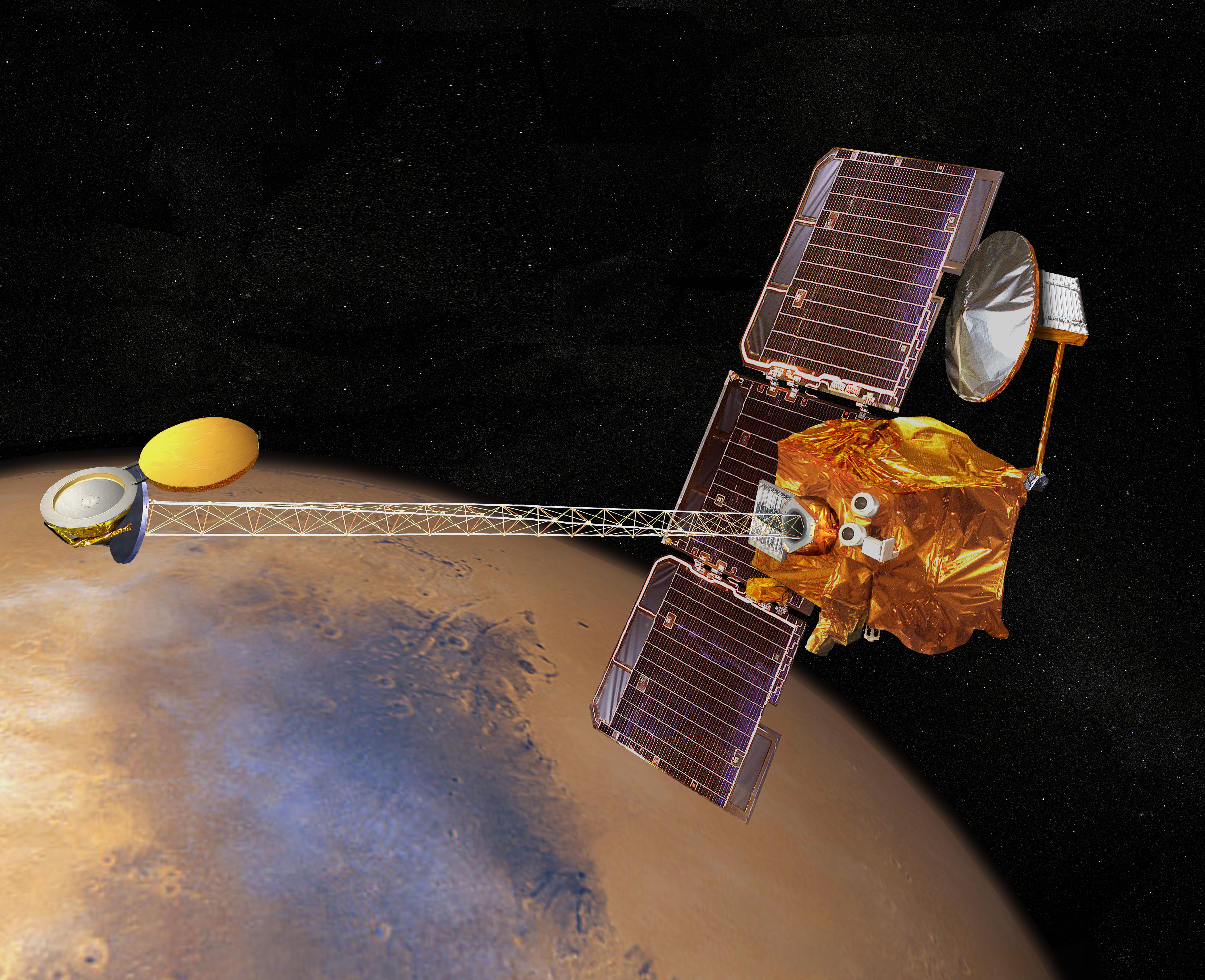
spacecraft · NASA
Studies Martian surface composition and relays communications for surface missions.
- Launch date
- 2001-04-07
- Days since launch
- 9342
Explore Mars Odyssey · View in 3D Solar System

spacecraft · NASA
Maps Mars and supports surface exploration through reconnaissance and communications.
- Launch date
- 2005-08-12
- Days since launch
- 7754
Explore Mars Reconnaissance Orbiter · View in 3D Solar System
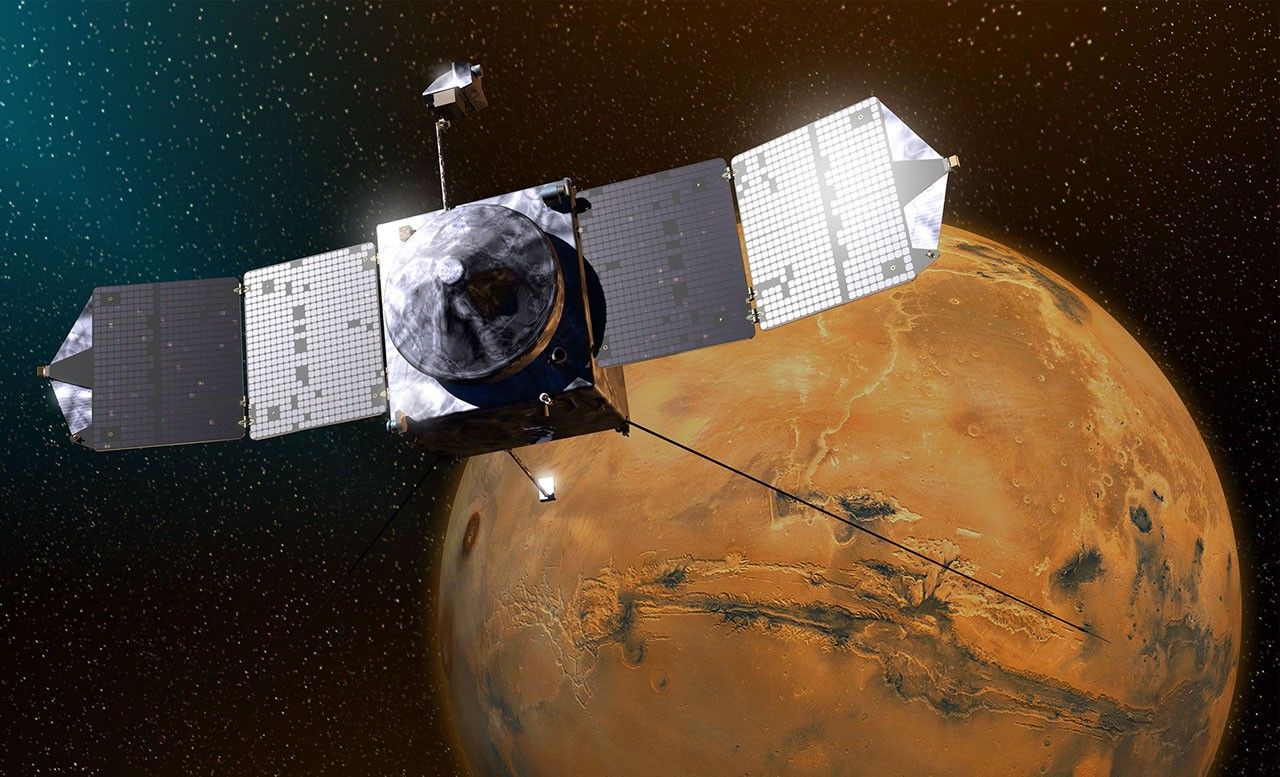
spacecraft · NASA
Investigated how Mars loses atmospheric gas to space.
- Launch date
- 2013-11-18
- Days since launch
- 4734
Explore MAVEN
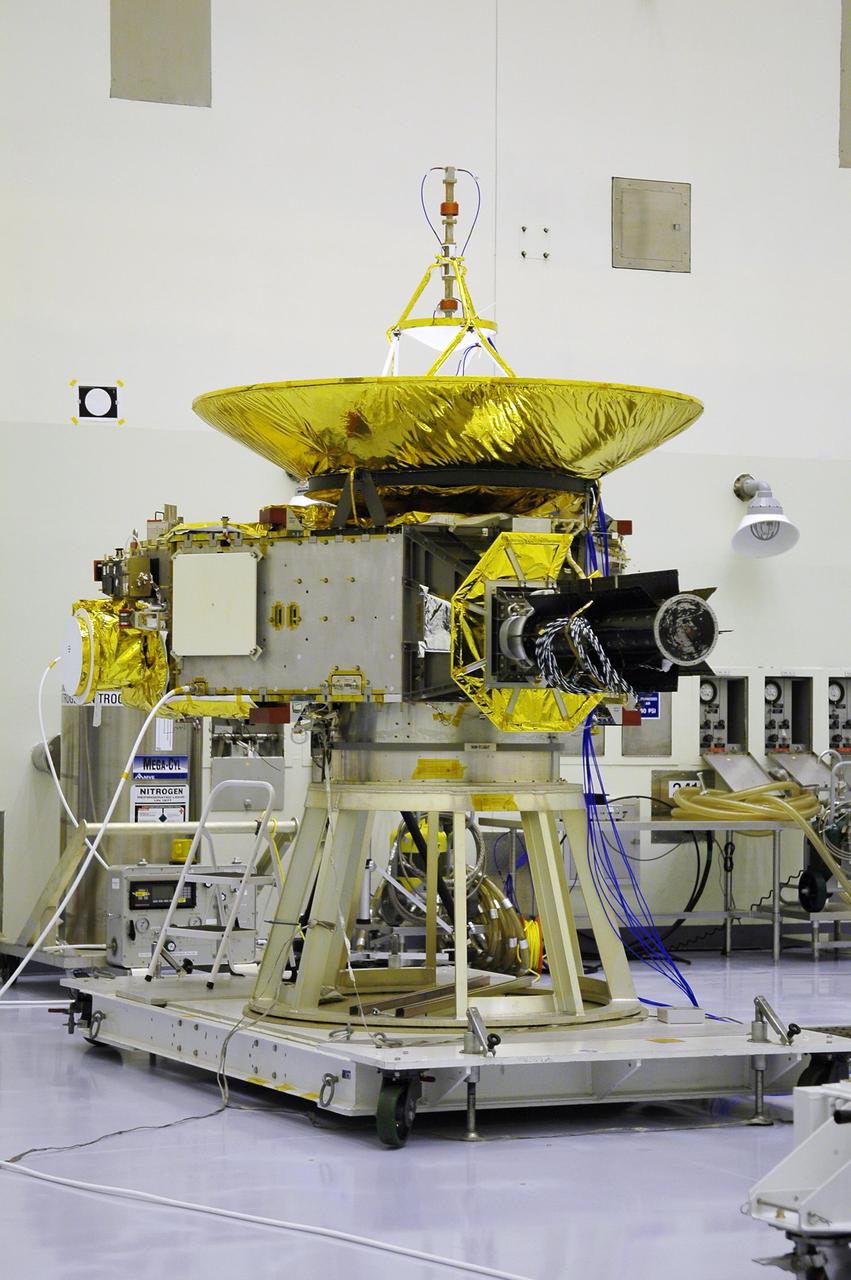
spacecraft · NASA / Johns Hopkins Applied Physics Laboratory
Investigates Pluto and small worlds in the Kuiper Belt.
- Launch date
- 2006-01-19
- Days since launch
- 7594
Explore New Horizons · View in 3D Solar System
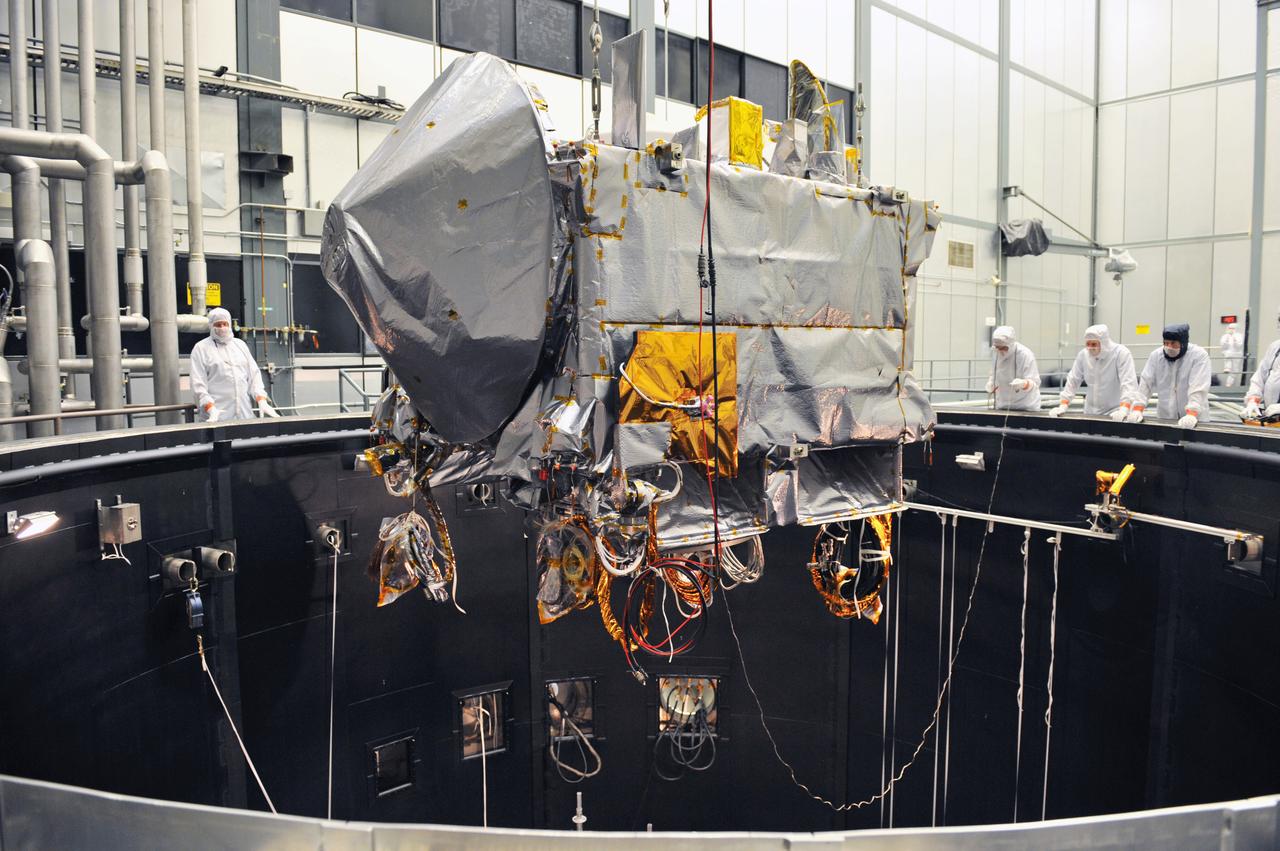
spacecraft · NASA / University of Arizona
The OSIRIS-REx spacecraft, renamed OSIRIS-APEX, continues toward Apophis.
Explore OSIRIS-APEX · View in 3D Solar System
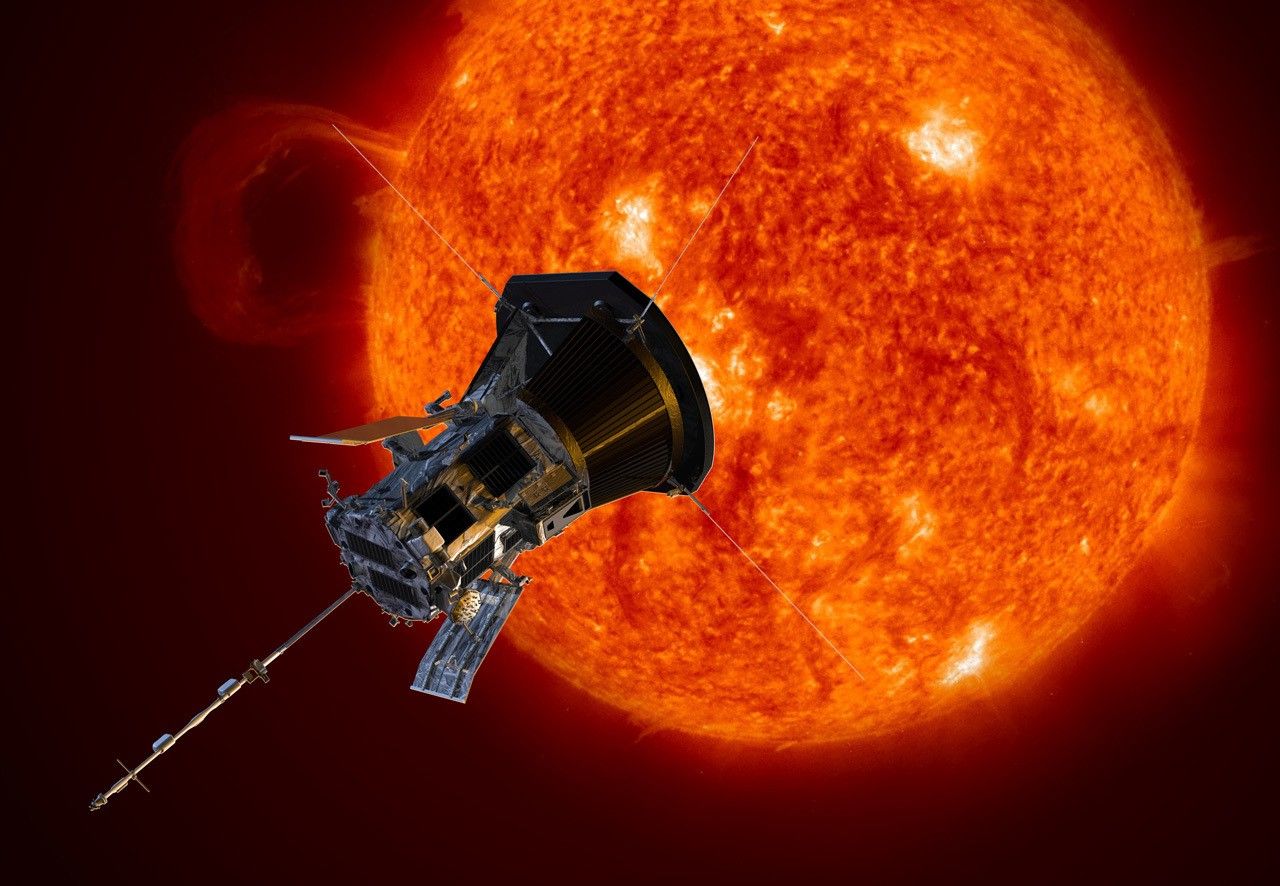
spacecraft · NASA / Johns Hopkins Applied Physics Laboratory
Measures the solar corona, solar wind and energetic particles.
- Launch date
- 2018-08-12
- Days since launch
- 3006
Explore Parker Solar Probe · View in 3D Solar System
spacecraft · NASA / Jet Propulsion Laboratory
Investigates ancient environments and collects rock samples for possible future return.
- Launch date
- 2020-07-30
- Days since launch
- 2288
Explore Perseverance Rover
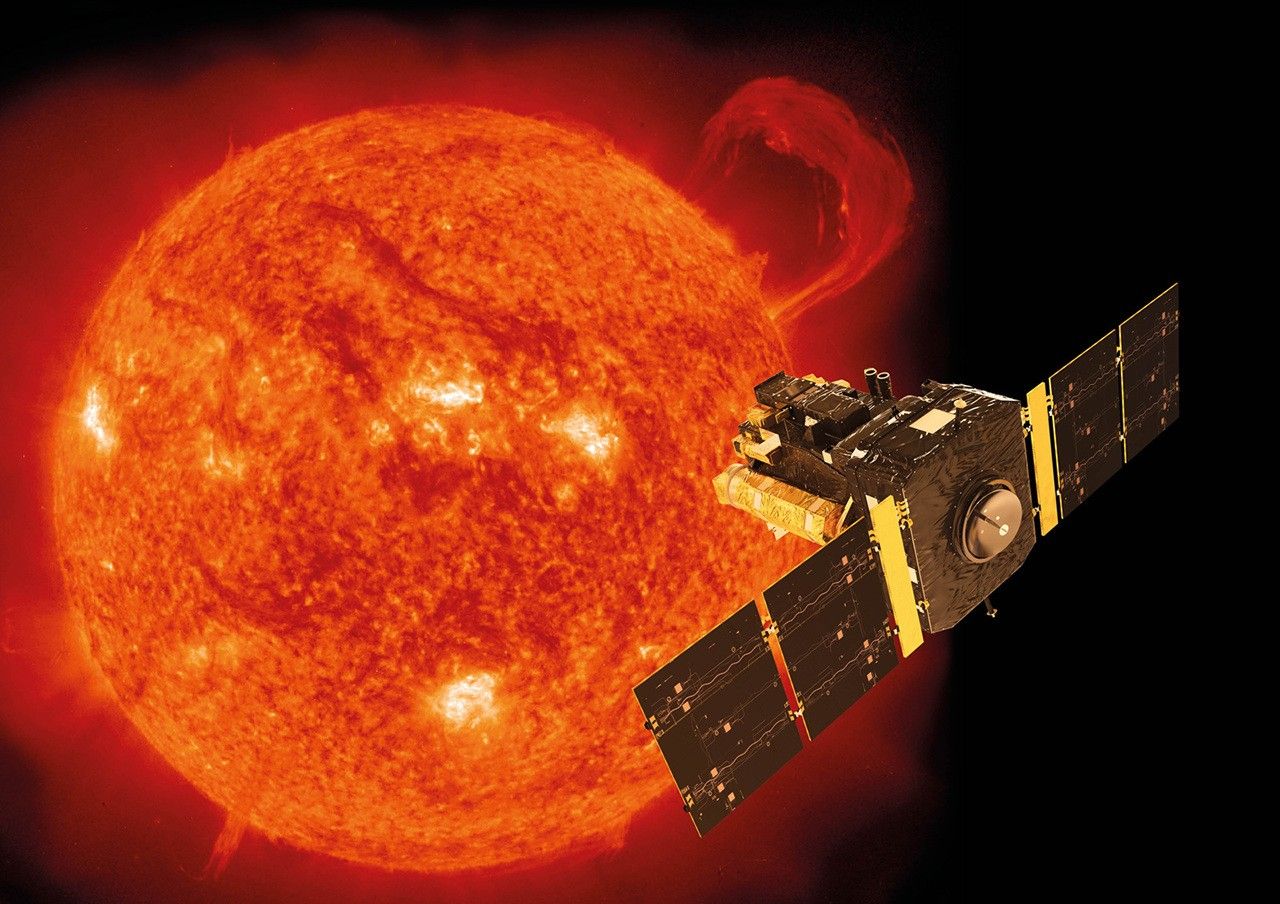
spacecraft · European Space Agency / NASA
Studies the Sun’s interior, atmosphere and solar wind from the Sun–Earth L1 region.
- Launch date
- 1995-12-02
- Days since launch
- 11295
Explore SOHO · View in 3D Solar System

spacecraft · NASA
STEREO-A observes solar activity and material flowing from the Sun.
Explore STEREO-A · View in 3D Solar System
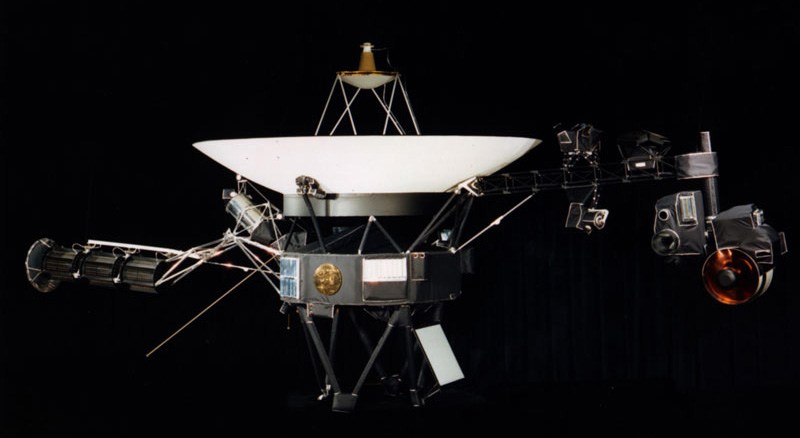
spacecraft · NASA / Jet Propulsion Laboratory
Explores the outer Solar System and the environment beyond the heliosphere.
- Launch date
- 1977-09-05
- Days since launch
- 17957
Explore Voyager 1 · View in 3D Solar System
spacecraft · NASA / Jet Propulsion Laboratory
The only spacecraft to have visited all four giant planets.
- Launch date
- 1977-08-20
- Days since launch
- 17973
Explore Voyager 2 · View in 3D Solar System
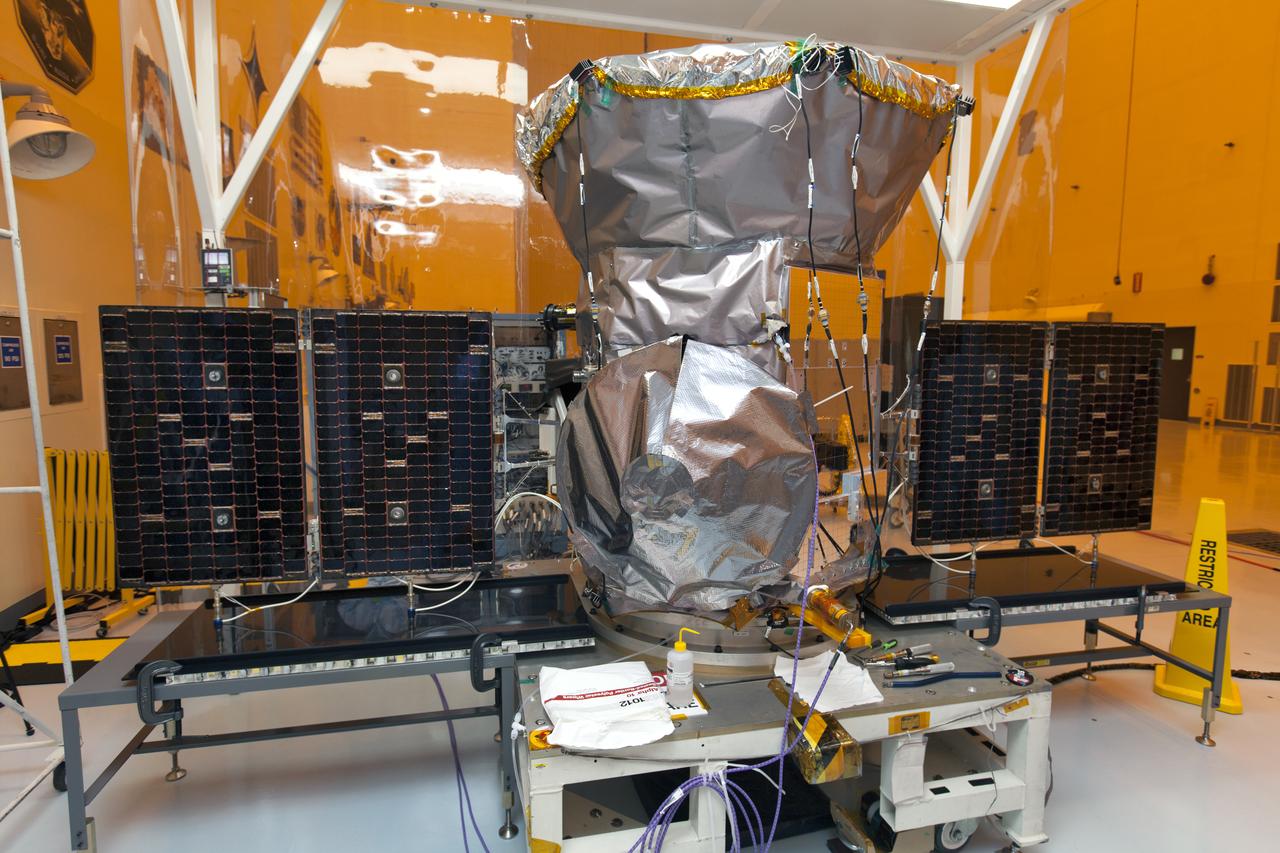
spacecraft · NASA / Massachusetts Institute of Technology
Searches for planets by measuring dips in stellar brightness.
- Launch date
- 2018-04-18
- Days since launch
- 3122
Explore TESS · View in 3D Solar System

spacecraft · NASA / Roscosmos / ESA / JAXA / CSA
An international orbital laboratory assembled from modules in low Earth orbit.
- Launch date
- 1998-11-20
- Days since launch
- 10211
Explore International Space Station (ISS) · View in 3D Solar System

spacecraft · NASA
Designed for wide-field surveys, including studies of dark energy and exoplanets.
Explore Nancy Grace Roman Space Telescope · View in 3D Solar System
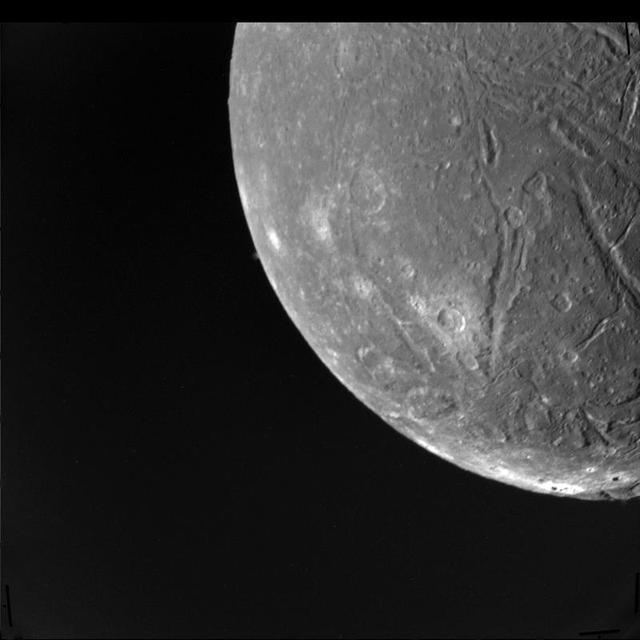
moon · Uranus
A natural satellite of Uranus. Its physical properties and orbital motion are shown from the available catalogue and ephemeris data.
- Mean radius (km)
- 578.9
- Orbital period (days)
- 2.520379
Explore Ariel · View in 3D Solar System
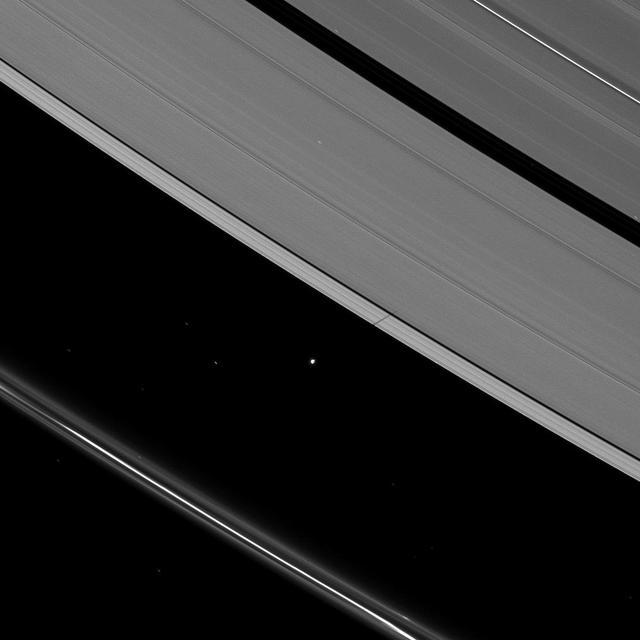
moon · Saturn
A natural satellite of Saturn. Its physical properties and orbital motion are shown from the available catalogue and ephemeris data.
- Mean radius (km)
- 15.1
- Orbital period (days)
- 0.604602
Explore Atlas · View in 3D Solar System
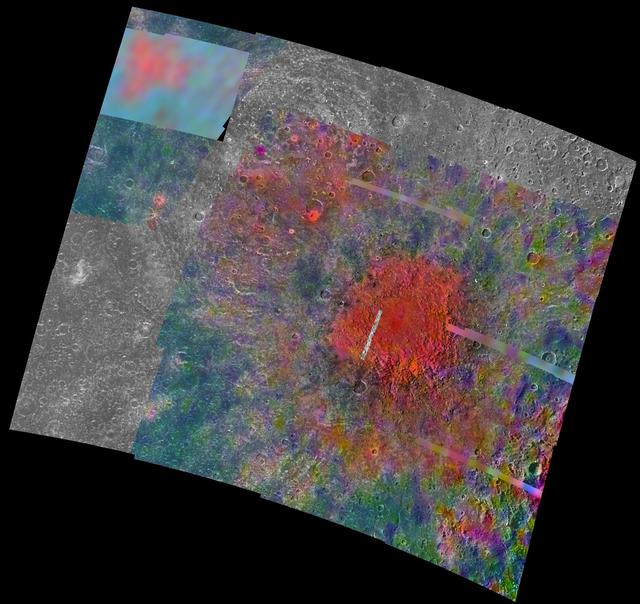
moon · Jupiter
Callisto is one of the most heavily cratered large bodies in the Solar System. Its ancient surface and evidence for a subsurface ocean make it an important comparison with the youn
- Mean radius (km)
- 2410.3
- Orbital period (days)
- 16.69044
Explore Callisto · View in 3D Solar System

dwarf planet · Sun
Ceres is the largest object in the main asteroid belt and the only dwarf planet in the inner Solar System. NASA’s Dawn mission revealed bright salt deposits and evidence of a water
Explore Ceres · View in 3D Solar System
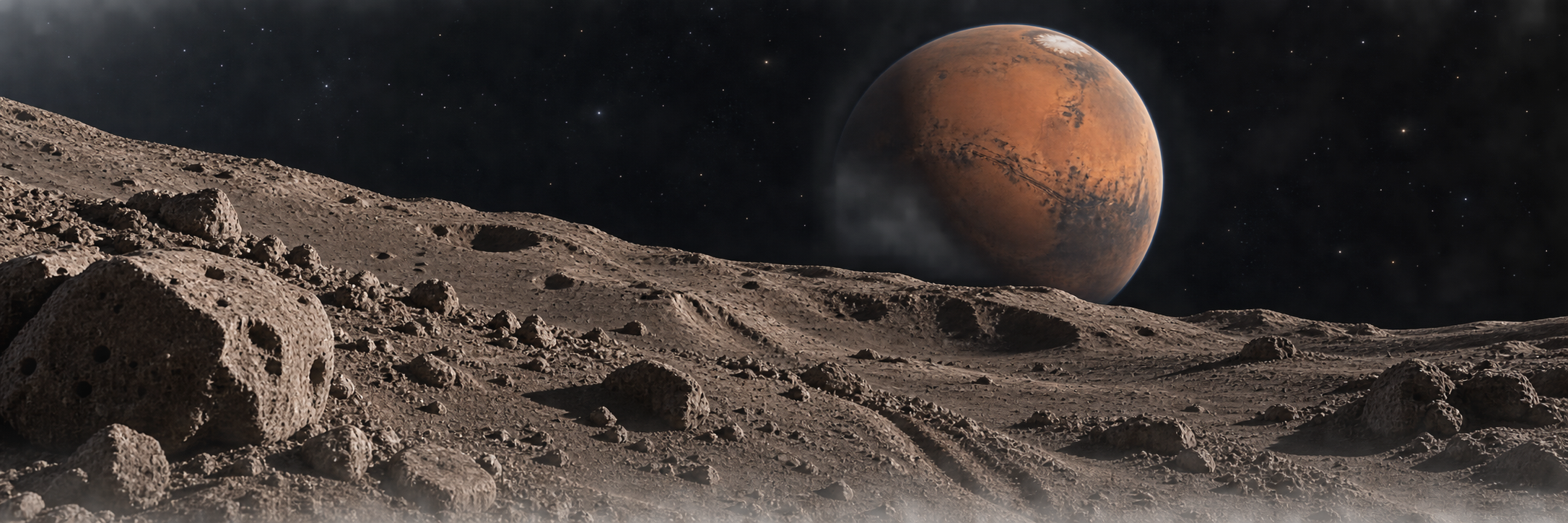
moon · Mars
A natural satellite of Mars. Its physical properties and orbital motion are shown from the available catalogue and ephemeris data.
- Mean radius (km)
- 6.2
- Orbital period (days)
- 1.2625
Explore Deimos · View in 3D Solar System

moon · Saturn
A natural satellite of Saturn. Its physical properties and orbital motion are shown from the available catalogue and ephemeris data.
- Mean radius (km)
- 561.4
- Orbital period (days)
- 2.736916
Explore Dione · View in 3D Solar System

moon · Saturn
Enceladus is a small icy moon whose south-polar fractures eject plumes of water and other material from a subsurface ocean, making it a key target in the search for habitable envir
- Mean radius (km)
- 252.1
- Orbital period (days)
- 1.370218
Explore Enceladus · View in 3D Solar System
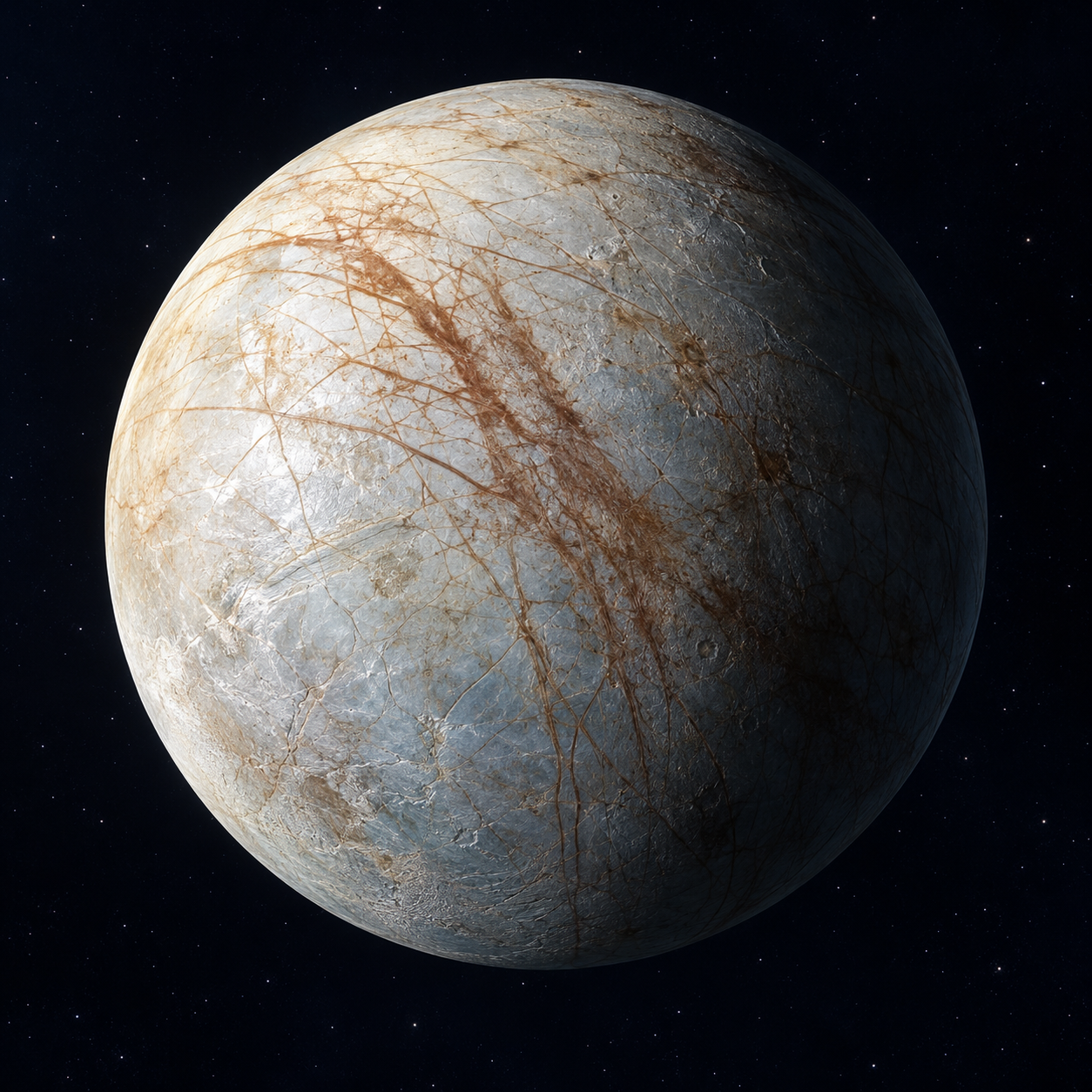
moon · Jupiter
Europa has a water-ice shell over a likely global saltwater ocean. Its potential habitability has made it one of the highest-priority destinations for planetary science.
- Mean radius (km)
- 1560.8
- Orbital period (days)
- 3.525463
Explore Europa · View in 3D Solar System
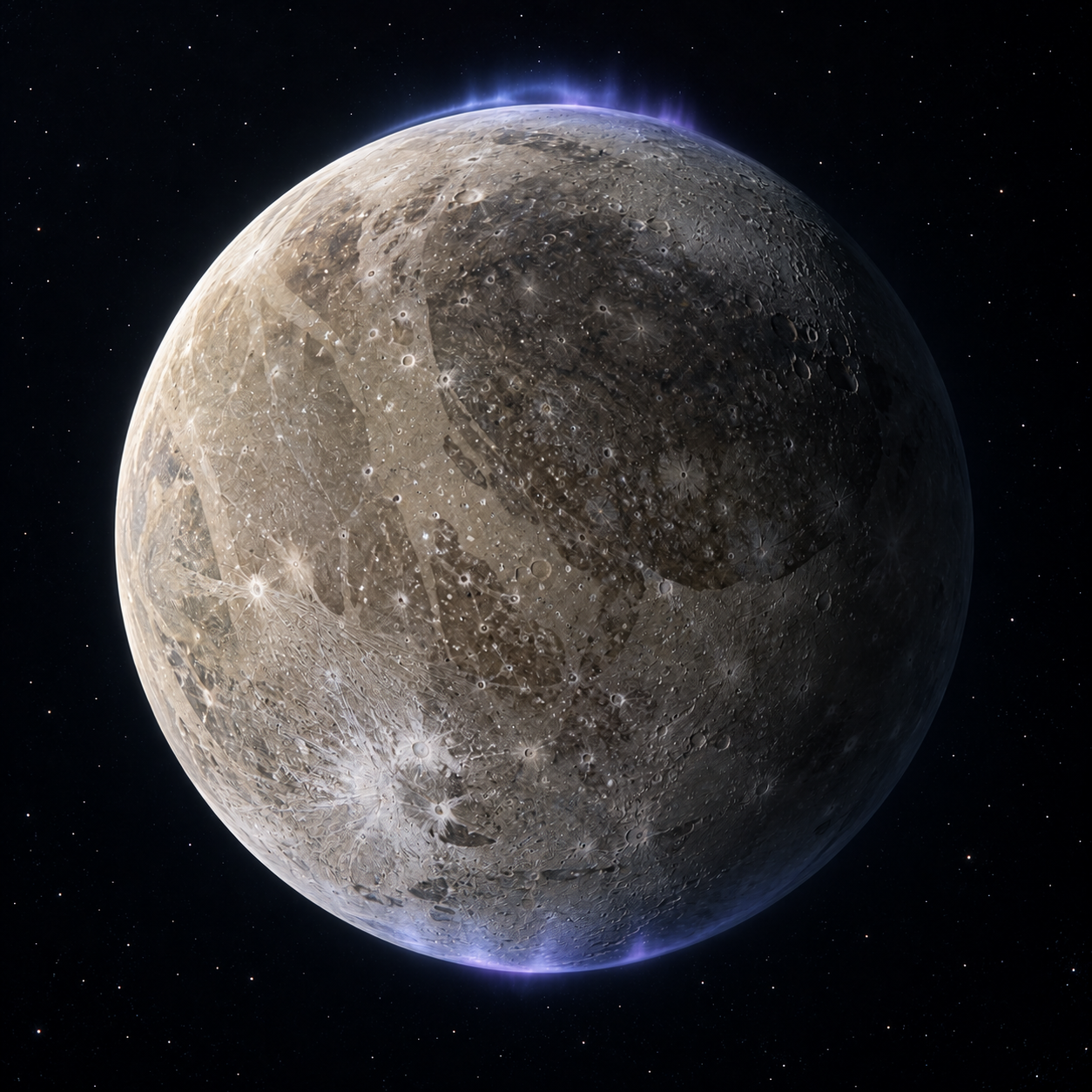
moon · Jupiter
Ganymede is the largest moon in the Solar System and the only moon known to generate its own intrinsic magnetic field. Evidence for a deep salty ocean makes it a major target for m
- Mean radius (km)
- 2631.2
- Orbital period (days)
- 7.155588
Explore Ganymede · View in 3D Solar System
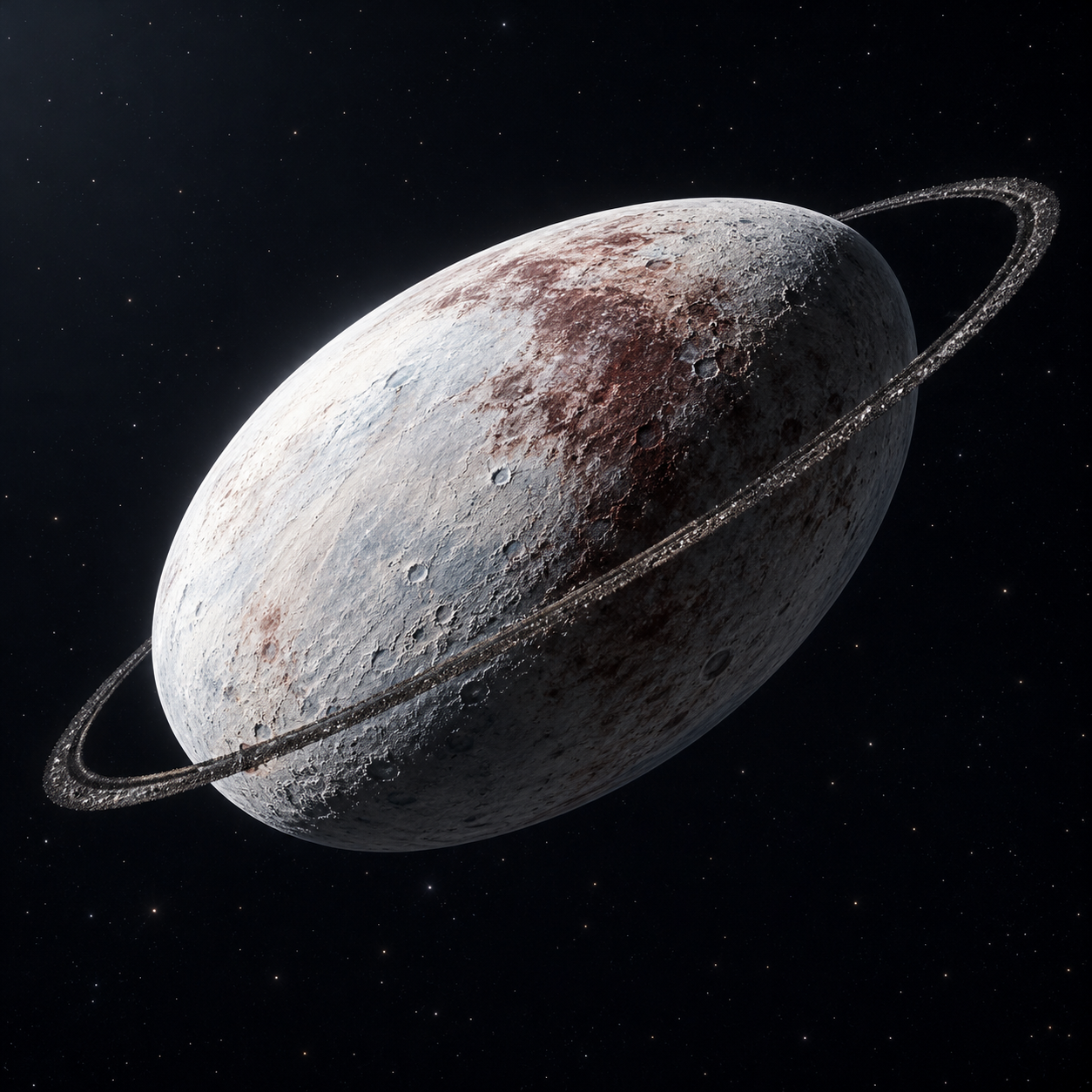
dwarf planet · Sun
Haumea is an unusually fast-spinning, elongated dwarf planet with a thin ring and two known moons. Its shape and rapid rotation make it one of the most distinctive large trans-Nept
Explore Haumea · View in 3D Solar System
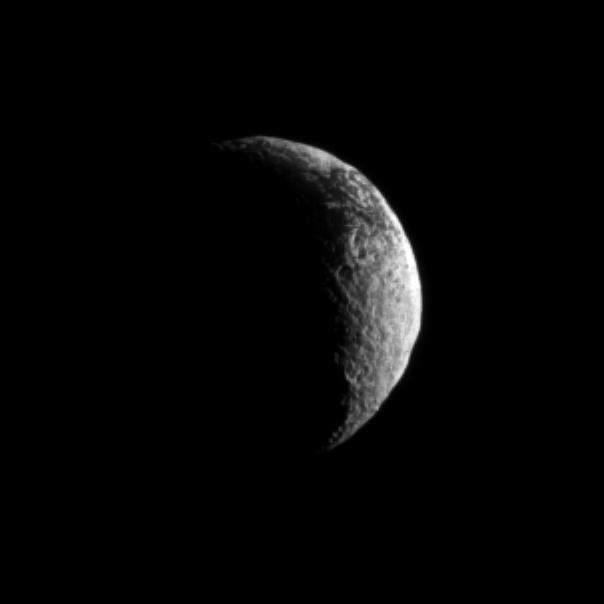
moon · Saturn
A natural satellite of Saturn. Its physical properties and orbital motion are shown from the available catalogue and ephemeris data.
- Mean radius (km)
- 734.3
- Orbital period (days)
- 79.331002
Explore Iapetus · View in 3D Solar System
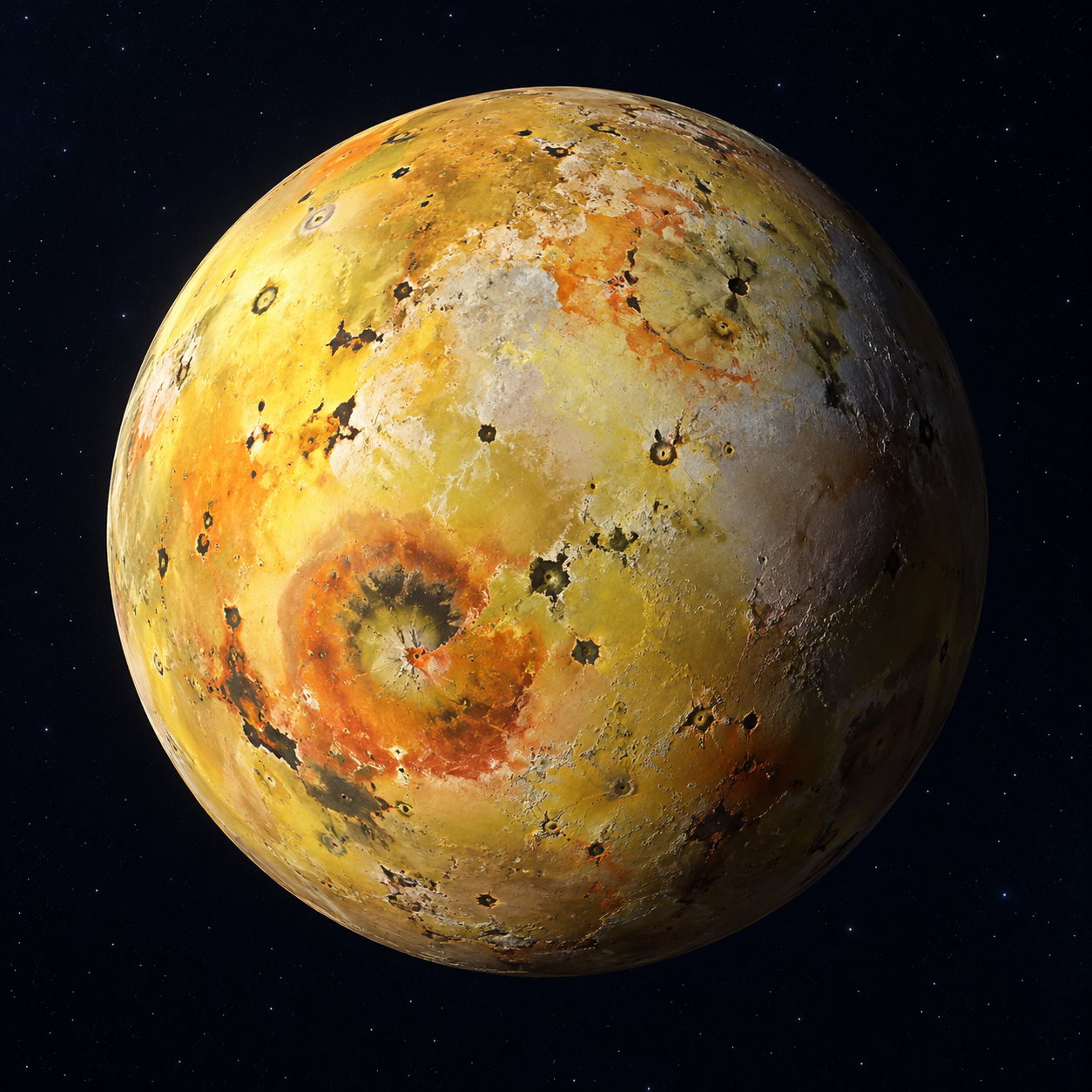
moon · Jupiter
Io is the most volcanically active world known. Tidal heating driven by Jupiter and its neighbouring moons powers enormous volcanic eruptions and reshapes the surface.
- Mean radius (km)
- 1821.49
- Orbital period (days)
- 1.762732
Explore Io · View in 3D Solar System

moon · Saturn
A natural satellite of Saturn. Its physical properties and orbital motion are shown from the available catalogue and ephemeris data.
- Mean radius (km)
- 198.2
- Orbital period (days)
- 0.942422
Explore Mimas · View in 3D Solar System

moon · Uranus
A natural satellite of Uranus. Its physical properties and orbital motion are shown from the available catalogue and ephemeris data.
- Mean radius (km)
- 235.8
- Orbital period (days)
- 1.413479
Explore Miranda · View in 3D Solar System


