top of page
space_encyclopedia_background.png

Welcome to SPACEdi's space encyclopedia profile for {objectName}. Our data engine provides object-specific articles, physical property tables, and exploration history overviews, connecting space enthusiasts, academy students, and scientific researchers to catalog imagery, structural planetary dimensions, and interactive 3D solar system models.

​

Platform Overview & Interactive Data Profiles:

​

Engineered by ARCHIMEDES Aerospace, this element bridges telemetry and ephemeris datasets with an immersive canvas interface for {Object_Name}. The interactive sandbox features:

​

  • Comprehensive Scale View: Investigate atmospheric layers, bulk composition, and surface features.

  • Voyage Planning Simulator: Deploy custom spacecraft objects to model complex orbital trajectories.

  • Integrated Scientific Engine: View related systems, natural satellites, and historical mission data from NASA, JPL, and ESA.

​

The platform supports flexible user levels—from free guest controls to saved personal libraries and academic integrations.

Hubble Space Telescope is a man-made spacecraft represented in the Solar System, the region of space around the Sun, our star, within the universe. Its catalogue reference body is Earth. Explore its story and purpose, then find the spacecraft on the interactive 3D space map.

Hubble Space Telescope — Observes astronomical objects from Earth orbit.

Mission and scientific objectives
Hubble Space Telescope is associated with NASA / European Space Agency. Observes astronomical objects from Earth orbit. The mission type is Space telescope.

Since its 1990 launch, the Hubble Space Telescope has changed our fundamental understanding of the universe.

Throughout the history of science, revolutionary instruments propel our understanding with their landmark discoveries. The Hubble Space Telescope is a testament to that concept. Its design, technology and serviceability have made it one of NASA's most transformative observatories. From determining the atmospheric composition of planets around other stars to discovering dark energy, Hubble has changed humanity's understanding of the universe.

Take a deep dive into NASA's Hubble and Roman space telescopes. We compare their differences and similarities and explain how they will work together to broaden our perspective of the universe.

NASA’s Hubble, Webb Find Far-out Solar System Objects ‘Remember’ Past

NASA’s Hubble Spies Superbubble Scene

NASA’s Hubble Tracks New Decagon Encircling Saturn’s South Pole

Hubble Solves Merger Mystery From Milky Way’s Early Years

NASA’s Hubble Shows Star Formation in Andromeda Galaxy Winding Down

NASA’s Hubble Discovers First of Star Cluster’s Missing Black Holes

NASA’s Hubble Spies Stellar Sparkler for July 4th

Hubble Focus: Gravitational Lenses ― Nature’s Giant Telescopes

Dive into Hubble’s discoveries that center around giant cosmic lenses that distort and magnify the light from distant objects.

What Did Hubble See on Your Birthday?

To celebrate the nation's 250th birthday, NASA expanded this web app with more images! See what Hubble observed on your birthday, or other special occasion, pick your favorite images, and share them with friends!

Go on a cosmic journey with Hubble

See the area of sky Hubble is investigating.

NASA's Tabletop Role-Playing Game Adventure

Get a Hubble's-eye-view of cosmic objects

Hubble Spacecraft 360 Degree Tour

Play this trivia game and test your knowledge!

Take a virtual tour of Hubble's operations center

Hubble Details Early Galaxy Transforming Neighborhood

Astronomers using NASA’s Hubble Space Telescope have found something they never expected — ultraviolet light from a galaxy that existed…

TESS (Transiting Exoplanet Survey Satellite)

NASA’s TESS discovers exoplanets, worlds beyond our solar system. In the course of its extended observations of the sky, TESS…

Nancy Grace Roman Space Telescope

The Nancy Grace Roman Space Telescope will settle essential questions in the areas of dark energy, exoplanets, and astrophysics.

The Chandra X-ray Observatory is the world's most powerful X-ray telescope.

Collaborating with NASA counterparts, citizen-scientist volunteers have helped make thousands of important exoplanet science discoveries. Learn how you can participate.

space_encyclopedia_background.png

Hubble Space Telescope

spacecraft · Earth · A window on the Universe above Earth’s atmosphere.
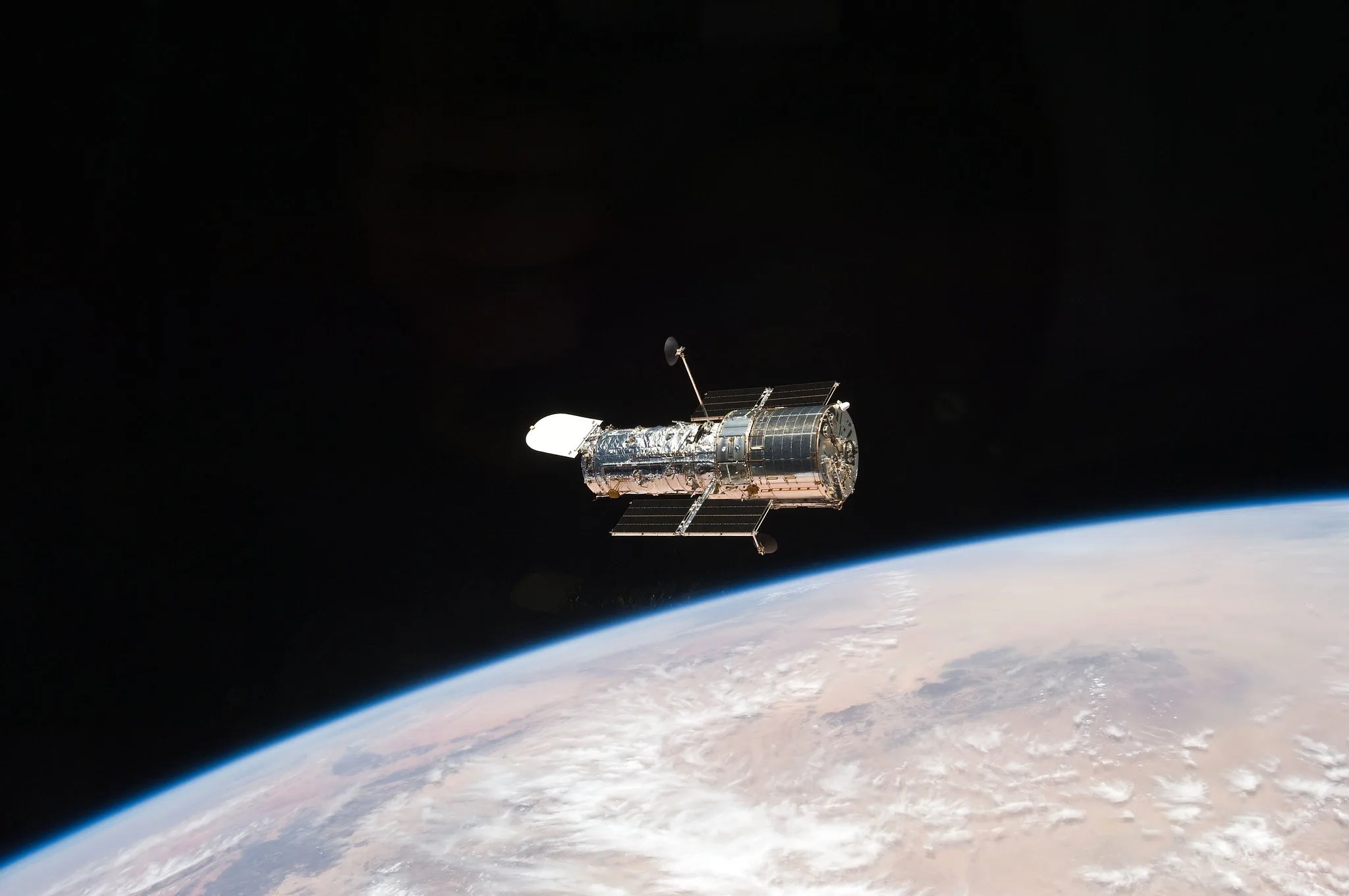
Hubble Space Telescope — spacecraft

Discover the space telescope whose observations have transformed our view of galaxies, stars and planets, then explore its mission on the SPACE-di interactive map.

View Hubble Space Telescope in the 3D Solar System

Overview

Hubble Space Telescope is a man-made spacecraft represented in the Solar System, the region of space around the Sun, our star, within the universe. Its catalogue reference body is Earth. Explore its story and purpose, then find the spacecraft on the interactive 3D space map.

Hubble Space Telescope — Observes astronomical objects from Earth orbit.

Mission and scientific objectives

Hubble Space Telescope is associated with NASA / European Space Agency. Observes astronomical objects from Earth orbit. The mission type is Space telescope.

Since its 1990 launch, the Hubble Space Telescope has changed our fundamental understanding of the universe.

Throughout the history of science, revolutionary instruments propel our understanding with their landmark discoveries. The Hubble Space Telescope is a testament to that concept. Its design, technology and serviceability have made it one of NASA's most transformative observatories. From determining the atmospheric composition of planets around other stars to discovering dark energy, Hubble has changed humanity's understanding of the universe.

Take a deep dive into NASA's Hubble and Roman space telescopes. We compare their differences and similarities and explain how they will work together to broaden our perspective of the universe.

NASA’s Hubble, Webb Find Far-out Solar System Objects ‘Remember’ Past

NASA’s Hubble Spies Superbubble Scene

NASA’s Hubble Tracks New Decagon Encircling Saturn’s South Pole

Hubble Solves Merger Mystery From Milky Way’s Early Years

NASA’s Hubble Shows Star Formation in Andromeda Galaxy Winding Down

NASA’s Hubble Discovers First of Star Cluster’s Missing Black Holes

NASA’s Hubble Spies Stellar Sparkler for July 4th

Hubble Focus: Gravitational Lenses ― Nature’s Giant Telescopes

Dive into Hubble’s discoveries that center around giant cosmic lenses that distort and magnify the light from distant objects.

What Did Hubble See on Your Birthday?

To celebrate the nation's 250th birthday, NASA expanded this web app with more images! See what Hubble observed on your birthday, or other special occasion, pick your favorite images, and share them with friends!

Go on a cosmic journey with Hubble

See the area of sky Hubble is investigating.

NASA's Tabletop Role-Playing Game Adventure

Get a Hubble's-eye-view of cosmic objects

Hubble Spacecraft 360 Degree Tour

Play this trivia game and test your knowledge!

Take a virtual tour of Hubble's operations center

Hubble Details Early Galaxy Transforming Neighborhood

Astronomers using NASA’s Hubble Space Telescope have found something they never expected — ultraviolet light from a galaxy that existed…

TESS (Transiting Exoplanet Survey Satellite)

NASA’s TESS discovers exoplanets, worlds beyond our solar system. In the course of its extended observations of the sky, TESS…

Nancy Grace Roman Space Telescope

The Nancy Grace Roman Space Telescope will settle essential questions in the areas of dark energy, exoplanets, and astrophysics.

The Chandra X-ray Observatory is the world's most powerful X-ray telescope.

Collaborating with NASA counterparts, citizen-scientist volunteers have helped make thousands of important exoplanet science discoveries. Learn how you can participate.

Key properties

Launch date
1990-04-24
Days since launch
13359 days
Mission organisation
NASA / European Space Agency
Mission type
Space telescope
Launch
24 April 1990
bottom of page