


Space › Universe › Solar System › Star › Sun › Spacecraft › OSIRIS-APEX
OSIRIS-APEX
ORBITS:
Sun
SPACECRAFT
A new chapter with asteroid Apophis.
Discover the former OSIRIS-REx spacecraft and its extended mission to investigate Apophis, then explore its mission on the SPACE-di interactive map.
naif:
-64
Reference material: NASA · NASA / Jet Propulsion Laboratory · 3D render credits
Make OSIRIS-APEX part of your exploration…
OSIRIS-APEX: a mission of discovery…
OSIRIS-APEX is a man-made spacecraft represented in the Solar System, the region of space around the Sun, our star, within the universe. Its catalogue reference body is Sun. Explore its story and purpose, then find the spacecraft on the interactive 3D space map.
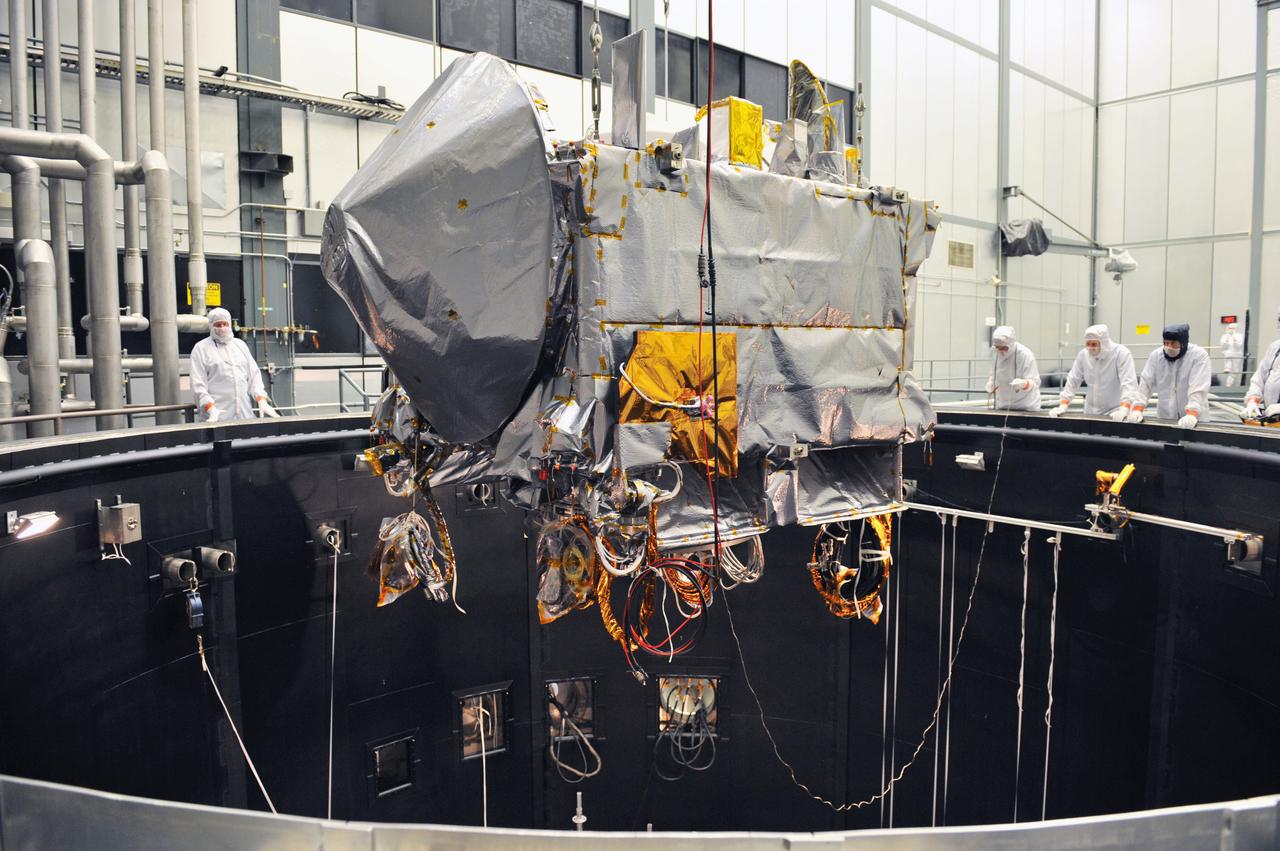
OSIRIS-APEX — The OSIRIS-REx spacecraft, renamed OSIRIS-APEX, continues toward Apophis.
Mission and scientific objectives
OSIRIS-APEX is associated with NASA / University of Arizona. The OSIRIS-REx spacecraft, renamed OSIRIS-APEX, continues toward Apophis. The mission type is Asteroid exploration probe.
Mission chronology
2023: Returned the Bennu sample capsule to Earth.
Apophis is the extended mission destination.
Origins, Spectral Interpretation, Resource Identification and Security – Apophis Explorer
OSIRIS-APEX, a follow-on to OSIRIS-REx, will study the physical changes to asteroid Apophis after the asteroid’s rare close encounter with Earth in 2029.
NASA’s OSIRIS-APEX Unscathed After Searing Pass of Sun
Despite traveling 25 million miles closer to the heat of the Sun on Jan. 2, 2024, than it was originally designed to, OSIRIS-APEX remained unscathed. A couple of instruments came out better than expected after exposure to higher temperatures.
OSIRIS-APEX is a mission to study the physical changes to asteroid Apophis that will result from its rare close encounter with Earth in April 2029. That year, Apophis’ orbit will bring it within 20,000 miles (32,000 kilometers) of Earth’s surface — closer to Earth than our highest-altitude satellites. Our planet’s gravitational pull is expected to alter the asteroid’s orbit, change how fast it spins on its axis, and possibly cause quakes or landslides that will alter its surface.
OSIRIS-APEX will allow scientists on Earth to observe these changes. Additionally, the OSIRIS-APEX spacecraft will dip toward the surface of Apophis – a “stony” asteroid made of silicate (or rocky) material and a mixture of metallic nickel and iron – and fire its engines to kick up loose rocks and dust. This maneuver will give scientists a peek at the composition of material just below the asteroid’s surface.
To view this video please enable JavaScript, and consider upgrading to a web browser that supports HTML5 video
When it was discovered in 2004, Apophis was identified as one of the most hazardous asteroids that could impact Earth. But the asteroid was removed from the impact risk list after astronomers tracked Apophis and its orbit became better determined.
Dani Mendoza DellaGiustina, the principal investigator of OSIRIS-APEX, is a planetary scientist with expertise in surface and near-surface structure of small airless worlds across the solar system. She was previously the deputy principal investigator for OSIRIS-REx.
OSIRIS-REx, the first U.S. mission to collect an asteroid sample in 2020, delivered the sample to Earth on Sept. 24, 2023.