top of page
space_encyclopedia_background.png

Welcome to SPACEdi's space encyclopedia profile for {objectName}. Our data engine provides object-specific articles, physical property tables, and exploration history overviews, connecting space enthusiasts, academy students, and scientific researchers to catalog imagery, structural planetary dimensions, and interactive 3D solar system models.

​

Platform Overview & Interactive Data Profiles:

​

Engineered by ARCHIMEDES Aerospace, this element bridges telemetry and ephemeris datasets with an immersive canvas interface for {Object_Name}. The interactive sandbox features:

​

  • Comprehensive Scale View: Investigate atmospheric layers, bulk composition, and surface features.

  • Voyage Planning Simulator: Deploy custom spacecraft objects to model complex orbital trajectories.

  • Integrated Scientific Engine: View related systems, natural satellites, and historical mission data from NASA, JPL, and ESA.

​

The platform supports flexible user levels—from free guest controls to saved personal libraries and academic integrations.

TESS is a man-made spacecraft represented in the Solar System, the region of space around the Sun, our star, within the universe. Its catalogue reference body is Earth. Explore its story and purpose, then find the spacecraft on the interactive 3D space map.

TESS — Searches for planets by measuring dips in stellar brightness.

Mission and scientific objectives
TESS is associated with NASA / Massachusetts Institute of Technology. Searches for planets by measuring dips in stellar brightness. The mission type is Space telescope.

NASA’s TESS discovers exoplanets, worlds beyond our solar system. In the course of its extended observations of the sky, TESS also finds and monitors all types of objects that change in brightness, from nearby asteroids to pulsating stars and distant galaxies containing supernovae.

The TESS mission has released its most complete view of the starry sky to date. Nearly 6,000 colored dots scattered across the image show the locations of either confirmed or candidate exoplanets — worlds beyond our solar system — identified by the mission as of September 2025 at the end of TESS’s second extended mission.

NASA’s TESS Mission Finds Planetary System in New Way

NASA’s TESS Mission Reveals the “Puffiest” Planets Ever Found

NASA’s Planet-Hunting TESS Reveals Dazzling Night Sky

For NASA’s TESS, Stellar Eclipses Shed Light on Possible New Worlds

NASA’s TESS Reobserves Comet 3I/ATLAS

Primary Mission Complete, TESS Extends its Exploration

NASA’s Transiting Exoplanet Survey Satellite (TESS) completed its two-year primary mission and continues its search for new worlds. Learn about some of TESS’s most interesting discoveries so far.

space_encyclopedia_background.png

TESS

spacecraft · Earth · Finding planets in the faintest dips of starlight.
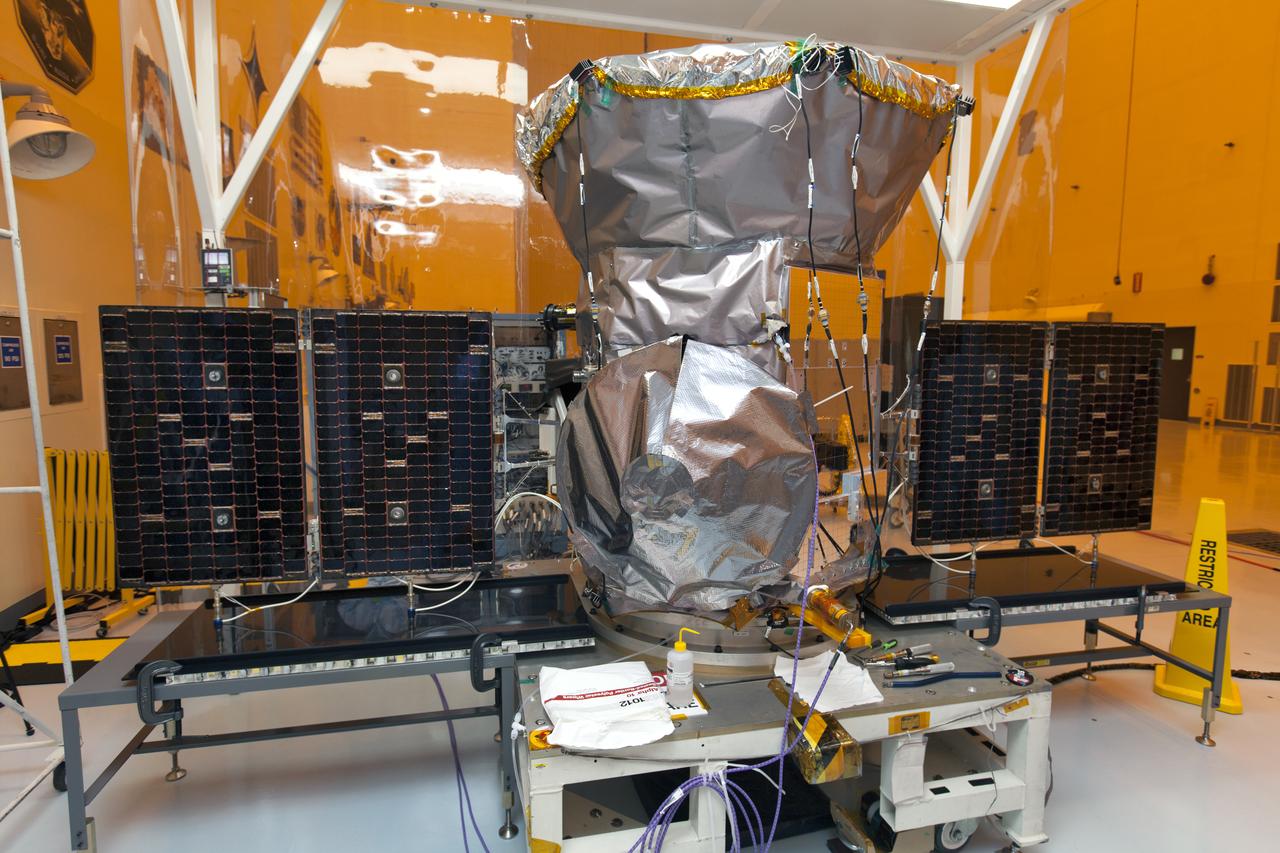
TESS — spacecraft

Discover the mission that searches for planets as they pass in front of their stars, then explore its mission on the SPACE-di interactive map.

View TESS in the 3D Solar System

Overview

TESS is a man-made spacecraft represented in the Solar System, the region of space around the Sun, our star, within the universe. Its catalogue reference body is Earth. Explore its story and purpose, then find the spacecraft on the interactive 3D space map.

TESS — Searches for planets by measuring dips in stellar brightness.

Mission and scientific objectives

TESS is associated with NASA / Massachusetts Institute of Technology. Searches for planets by measuring dips in stellar brightness. The mission type is Space telescope.

NASA’s TESS discovers exoplanets, worlds beyond our solar system. In the course of its extended observations of the sky, TESS also finds and monitors all types of objects that change in brightness, from nearby asteroids to pulsating stars and distant galaxies containing supernovae.

The TESS mission has released its most complete view of the starry sky to date. Nearly 6,000 colored dots scattered across the image show the locations of either confirmed or candidate exoplanets — worlds beyond our solar system — identified by the mission as of September 2025 at the end of TESS’s second extended mission.

NASA’s TESS Mission Finds Planetary System in New Way

NASA’s TESS Mission Reveals the “Puffiest” Planets Ever Found

NASA’s Planet-Hunting TESS Reveals Dazzling Night Sky

For NASA’s TESS, Stellar Eclipses Shed Light on Possible New Worlds

NASA’s TESS Reobserves Comet 3I/ATLAS

Primary Mission Complete, TESS Extends its Exploration

NASA’s Transiting Exoplanet Survey Satellite (TESS) completed its two-year primary mission and continues its search for new worlds. Learn about some of TESS’s most interesting discoveries so far.

Key properties

Launch date
2018-04-18
Days since launch
3138 days
Mission organisation
NASA / Massachusetts Institute of Technology
Mission type
Space telescope
Launch
18 April 2018
bottom of page