top of page
space_encyclopedia_background.png

Welcome to SPACEdi's space encyclopedia profile for {objectName}. Our data engine provides object-specific articles, physical property tables, and exploration history overviews, connecting space enthusiasts, academy students, and scientific researchers to catalog imagery, structural planetary dimensions, and interactive 3D solar system models.

​

Platform Overview & Interactive Data Profiles:

​

Engineered by ARCHIMEDES Aerospace, this element bridges telemetry and ephemeris datasets with an immersive canvas interface for {Object_Name}. The interactive sandbox features:

​

  • Comprehensive Scale View: Investigate atmospheric layers, bulk composition, and surface features.

  • Voyage Planning Simulator: Deploy custom spacecraft objects to model complex orbital trajectories.

  • Integrated Scientific Engine: View related systems, natural satellites, and historical mission data from NASA, JPL, and ESA.

​

The platform supports flexible user levels—from free guest controls to saved personal libraries and academic integrations.

Suttungr is a moon of Saturn, part of the Solar System in the universe. Saturn is a planet associated with the Sun, our star, and this space encyclopedia describes the moon’s identity and place in its planetary system.

Suttungr — A natural satellite of Saturn. Its physical properties and orbital motion are shown from the available catalogue and ephemeris data.

No object-specific chemical/elemental dataset has been verified and imported for this record. This does not mean none is publicly available. Appearance may be imagined; chemistry is not.

Discovery and designation
Suttungr was discovered in 2000. JPL credits B. Gladman, J. Kavelaars, J.-M. Petit, H. Scholl, M. Holman, B.G. Marsden, P. Nicholson, J.A. Burns. Its provisional designation is S/2000 S12. The name and discovery entry identify this particular satellite of Saturn; similarly named asteroids are separate objects.

Suttungr was discovered in 2000 by Brett J. Gladman, John J. Kavelaars, Jean-Marc Petit, Hans Scholl, Matthew J. Holman, Brian G. Marsden, Phillip D. Nicholson, and Joseph A. Burns using the 3.6-m Canada-France-Hawaii reflector on Mauna Kea, Hawaii, with adaptive optics. They discovered seven other Saturnian moons at the same time: Tarvos, Ijiraq, Thrymr, Skathi, Siarnaq, Erriapus, and Mundilfari.

Suttungr has a mean radius of 2.2 miles (3.5 kilometers), assuming an albedo (a measure of how reflective the surface is) of 0.06. It orbits Saturn at an inclination of about 174 degrees and an eccentricity of about 0.1. At a mean distance of 12.1 million miles (19.5 million kilometers) from Saturn, the moon takes about 1,017 Earth days to complete one orbit.

Suttungr is a member of the Norse group of moons. These "irregular" moons have retrograde orbits around Saturn — traveling around in the opposite direction from the planet's rotation. Suttungr and the other Norse moons also have eccentric orbits, meaning they are more elongated than circular.

Like Saturn's other irregular moons, Suttungr is thought to be an object that was captured by Saturn's gravity, rather than having accreted from the dusty disk that surrounded the newly formed planet as the regular moons are thought to have done.

Originally called S/2000 S12, Suttungr was named for Suttungr (also spelled Suttung), a giant in Norse mythology. Two dwarfs were responsible for the death of Suttungr's father in a "boating accident." Those same two dwarfs also murdered his mother. So Suttungr captured the dwarfs and took them to a reef, planning to leave them there to drown when the high tide came in. However, Suttung relented when the dwarfs offered to give him special mead (an alcoholic drink made of honey and, in this special case, the blood of a traveling wise man they had killed) which made anyone who drank the mead a poet or scholar. Suttungr ultimately lost the mead to Odin, the supreme Norse god.

space_encyclopedia_background.png

Suttungr

moon · Saturn · Suttungr. A 2000 discovery in Saturn’s skies.
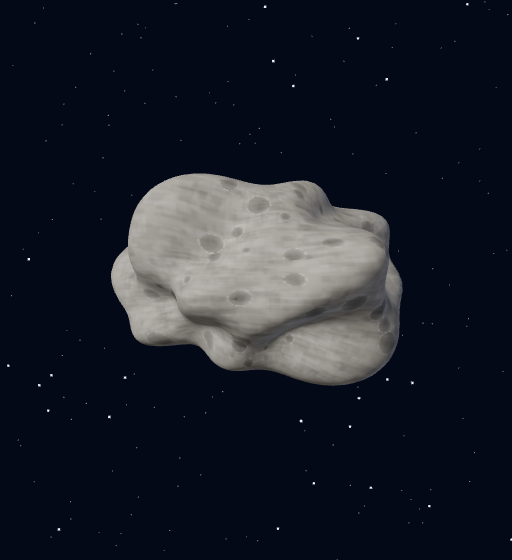
Suttungr

Discover Suttungr, a moon of Saturn with an orbital semi-major axis of about 19,391,900 km, discovered in 2000, then explore its place in the Solar System on the SPACE-di interactive map.

View Suttungr in the 3D Solar System

Overview

Suttungr is a moon of Saturn, part of the Solar System in the universe. Saturn is a planet associated with the Sun, our star, and this space encyclopedia describes the moon’s identity and place in its planetary system.

Suttungr — A natural satellite of Saturn. Its physical properties and orbital motion are shown from the available catalogue and ephemeris data.

No object-specific chemical/elemental dataset has been verified and imported for this record. This does not mean none is publicly available. Appearance may be imagined; chemistry is not.

Discovery and designation

Suttungr was discovered in 2000. JPL credits B. Gladman, J. Kavelaars, J.-M. Petit, H. Scholl, M. Holman, B.G. Marsden, P. Nicholson, J.A. Burns. Its provisional designation is S/2000 S12. The name and discovery entry identify this particular satellite of Saturn; similarly named asteroids are separate objects.

Suttungr was discovered in 2000 by Brett J. Gladman, John J. Kavelaars, Jean-Marc Petit, Hans Scholl, Matthew J. Holman, Brian G. Marsden, Phillip D. Nicholson, and Joseph A. Burns using the 3.6-m Canada-France-Hawaii reflector on Mauna Kea, Hawaii, with adaptive optics. They discovered seven other Saturnian moons at the same time: Tarvos, Ijiraq, Thrymr, Skathi, Siarnaq, Erriapus, and Mundilfari.

Suttungr has a mean radius of 2.2 miles (3.5 kilometers), assuming an albedo (a measure of how reflective the surface is) of 0.06. It orbits Saturn at an inclination of about 174 degrees and an eccentricity of about 0.1. At a mean distance of 12.1 million miles (19.5 million kilometers) from Saturn, the moon takes about 1,017 Earth days to complete one orbit.

Suttungr is a member of the Norse group of moons. These "irregular" moons have retrograde orbits around Saturn — traveling around in the opposite direction from the planet's rotation. Suttungr and the other Norse moons also have eccentric orbits, meaning they are more elongated than circular.

Like Saturn's other irregular moons, Suttungr is thought to be an object that was captured by Saturn's gravity, rather than having accreted from the dusty disk that surrounded the newly formed planet as the regular moons are thought to have done.

Originally called S/2000 S12, Suttungr was named for Suttungr (also spelled Suttung), a giant in Norse mythology. Two dwarfs were responsible for the death of Suttungr's father in a "boating accident." Those same two dwarfs also murdered his mother. So Suttungr captured the dwarfs and took them to a reef, planning to leave them there to drown when the high tide came in. However, Suttung relented when the dwarfs offered to give him special mead (an alcoholic drink made of honey and, in this special case, the blood of a traveling wise man they had killed) which made anyone who drank the mead a poet or scholar. Suttungr ultimately lost the mead to Odin, the supreme Norse god.

Key properties

Orbital period
1008.2451 days
bottom of page