top of page
space_encyclopedia_background.png

Welcome to SPACEdi's space encyclopedia profile for {objectName}. Our data engine provides object-specific articles, physical property tables, and exploration history overviews, connecting space enthusiasts, academy students, and scientific researchers to catalog imagery, structural planetary dimensions, and interactive 3D solar system models.

​

Platform Overview & Interactive Data Profiles:

​

Engineered by ARCHIMEDES Aerospace, this element bridges telemetry and ephemeris datasets with an immersive canvas interface for {Object_Name}. The interactive sandbox features:

​

  • Comprehensive Scale View: Investigate atmospheric layers, bulk composition, and surface features.

  • Voyage Planning Simulator: Deploy custom spacecraft objects to model complex orbital trajectories.

  • Integrated Scientific Engine: View related systems, natural satellites, and historical mission data from NASA, JPL, and ESA.

​

The platform supports flexible user levels—from free guest controls to saved personal libraries and academic integrations.

Stephano is a moon of Uranus, part of the Solar System in the universe. Uranus is a planet associated with the Sun, our star, and this space encyclopedia describes the moon’s identity and place in its planetary system.

Stephano — A natural satellite of Uranus. Its physical properties and orbital motion are shown from the available catalogue and ephemeris data.

No object-specific chemical/elemental dataset has been verified and imported for this record. This does not mean none is publicly available. Appearance may be imagined; chemistry is not.

Discovery and designation
Stephano was discovered in 1999. JPL credits B. Gladman, M. Holman, J.J. Kavelaars, J.-M. Petit, H. Scholl. Its provisional designation is S/1999 U2. The name and discovery entry identify this particular satellite of Uranus; similarly named asteroids are separate objects.

Stephano was discovered on July 18, 1999 by Brett Gladman, Matthew Holman, John J. Kavelaars, Jean-Marc Petit, and Hans Scholl using the Canada-France-Hawaii Telescope at the Mauna Kea Observatory on the island of Hawaii. They discovered Prospero and Setebos at the same time.

About 20 miles (32 kilometers) in diameter (assuming an albedo of 0.04), Stephano is a small, dark moon which orbits Uranus in the opposite direction from the regular satellites and the planet's rotation (a retrograde orbit). Its orbital characteristics are similar to those of Caliban, suggesting a common origin.

Originally called S/1999 U2, Stephano was named for a boisterous butler of King Alonso in William Shakespeare's play, "The Tempest."

space_encyclopedia_background.png

Stephano

moon · Uranus · Stephano. A 1999 discovery in Uranus’s skies.
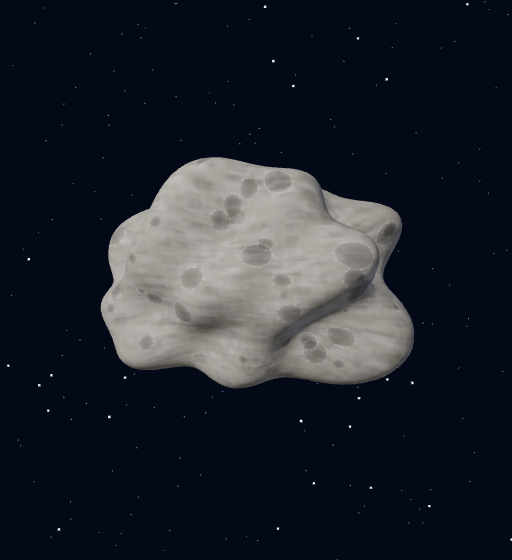
Stephano

Discover Stephano, a moon of Uranus with an orbital semi-major axis of about 7,951,400 km, discovered in 1999, then explore its place in the Solar System on the SPACE-di interactive map.

View Stephano in the 3D Solar System

Overview

Stephano is a moon of Uranus, part of the Solar System in the universe. Uranus is a planet associated with the Sun, our star, and this space encyclopedia describes the moon’s identity and place in its planetary system.

Stephano — A natural satellite of Uranus. Its physical properties and orbital motion are shown from the available catalogue and ephemeris data.

No object-specific chemical/elemental dataset has been verified and imported for this record. This does not mean none is publicly available. Appearance may be imagined; chemistry is not.

Discovery and designation

Stephano was discovered in 1999. JPL credits B. Gladman, M. Holman, J.J. Kavelaars, J.-M. Petit, H. Scholl. Its provisional designation is S/1999 U2. The name and discovery entry identify this particular satellite of Uranus; similarly named asteroids are separate objects.

Stephano was discovered on July 18, 1999 by Brett Gladman, Matthew Holman, John J. Kavelaars, Jean-Marc Petit, and Hans Scholl using the Canada-France-Hawaii Telescope at the Mauna Kea Observatory on the island of Hawaii. They discovered Prospero and Setebos at the same time.

About 20 miles (32 kilometers) in diameter (assuming an albedo of 0.04), Stephano is a small, dark moon which orbits Uranus in the opposite direction from the regular satellites and the planet's rotation (a retrograde orbit). Its orbital characteristics are similar to those of Caliban, suggesting a common origin.

Originally called S/1999 U2, Stephano was named for a boisterous butler of King Alonso in William Shakespeare's play, "The Tempest."

Key properties

Orbital period
677 days
bottom of page