top of page
space_encyclopedia_background.png

Welcome to SPACEdi's space encyclopedia profile for {objectName}. Our data engine provides object-specific articles, physical property tables, and exploration history overviews, connecting space enthusiasts, academy students, and scientific researchers to catalog imagery, structural planetary dimensions, and interactive 3D solar system models.

​

Platform Overview & Interactive Data Profiles:

​

Engineered by ARCHIMEDES Aerospace, this element bridges telemetry and ephemeris datasets with an immersive canvas interface for {Object_Name}. The interactive sandbox features:

​

  • Comprehensive Scale View: Investigate atmospheric layers, bulk composition, and surface features.

  • Voyage Planning Simulator: Deploy custom spacecraft objects to model complex orbital trajectories.

  • Integrated Scientific Engine: View related systems, natural satellites, and historical mission data from NASA, JPL, and ESA.

​

The platform supports flexible user levels—from free guest controls to saved personal libraries and academic integrations.

Phobos is a moon of Mars, part of the Solar System in the universe. Mars is a planet associated with the Sun, our star, and this space encyclopedia describes the moon’s identity and place in its planetary system.

Phobos — A natural satellite of Mars. Its physical properties and orbital motion are shown from the available catalogue and ephemeris data.

No object-specific chemical/elemental dataset has been verified and imported for this record. This does not mean none is publicly available. Appearance may be imagined; chemistry is not.

Discovery and designation
Phobos was discovered in 1877. JPL credits A. Hall. The name and discovery entry identify this particular satellite of Mars; similarly named asteroids are separate objects.

Phobos is the larger of Mars' two moons. It orbits Mars three times a day, and is so close to the planet's surface that in some locations on Mars it cannot always be seen.

The largest feature on Phobos is Stickney crater.

Phobos is the larger of Mars' two moons and is 17 x 14 x 11 miles (27 by 22 by 18 kilometers) in diameter. It orbits Mars three times a day, and is so close to the planet's surface that in some locations on Mars it cannot always be seen.

Phobos was nearly shattered by a giant impact, and has gouges from thousands of meteorite impacts.

Phobos is on a collision course with Mars. It's nearing Mars at a rate of six feet (1.8 meters) every hundred years. At that rate, the moon will either crash into Mars in 50 million years or break up into a ring.

The most prominent feature on Phobos is Stickney Crater, which is named for Chloe Angeline Stickney Hall, mathematician and wife of astronomer Asaph Hall. Asaph Hall discovered both the Red Planet's moons in 1877.

Stickney crater is about 6-miles (9.7 kilometers) wide, and takes up about half the moon's surface. NASA Mars Global Surveyor took images of the crater, and it appears to be filled with fine dust, with evidence of boulders sliding down its sloped surface.

Phobos and Deimos appear to be composed of C-type rock, similar to blackish carbonaceous chondrite asteroids. Observations by Mars Global Surveyor indicate that the surface of this small body has been pounded into powder by eons of meteoroid impacts, some of which started landslides that left dark trails marking the steep slopes of giant craters.

Measurements of the day and night sides of Phobos show such extreme temperature variations that the sunlit side of the moon rivals a pleasant winter day in Chicago, while only a few kilometers away, on the dark side of the moon, the climate is more harsh than a night in Antarctica. High temperatures for Phobos were measured at 25 degrees Fahrenheit (-4 degrees Celsius) and lows at -170 degrees Fahrenheit (-112 degrees Celsius). This intense heat loss is likely a result of the fine dust on Phobos' surface, which is unable to retain heat.

Phobos has no atmosphere. It may be a captured asteroid, but some scientists show evidence that contradicts this theory.

Phobos was discovered on Aug. 17, 1877 by Asaph Hall. Hall named Mars' moons for the mythological sons of Ares, the Greek counterpart of the Roman god, Mars. Phobos means fear, and is the brother of Deimos.

NASA Selects Blue Origin as Mars Telecommunications Network Provider

NASA Tests Featherweight Radar Antenna for SkyFall Mars Helicopters

NASA’s Perseverance Rover Watches Earth Vanish Behind Martian Moon

NASA’s Curiosity Mars Rover Discovers Field of Honeycomb Textures

NASA’s MAVEN Illuminates New Understanding of Auroras at Mars

Mars is the fourth planet from the Sun, and the seventh largest. It’s the only planet we know of inhabited…

Mars is one of the most explored bodies in our solar system, and it's the only planet where we've sent…

Mars has two moons, Phobos and Deimos. Both are thought to be captured asteroids, or debris from early in the…

Deimos is the smaller of the two Martian moons and is less irregular in shape.

space_encyclopedia_background.png

Phobos

moon · Mars · A battered companion close to Mars.
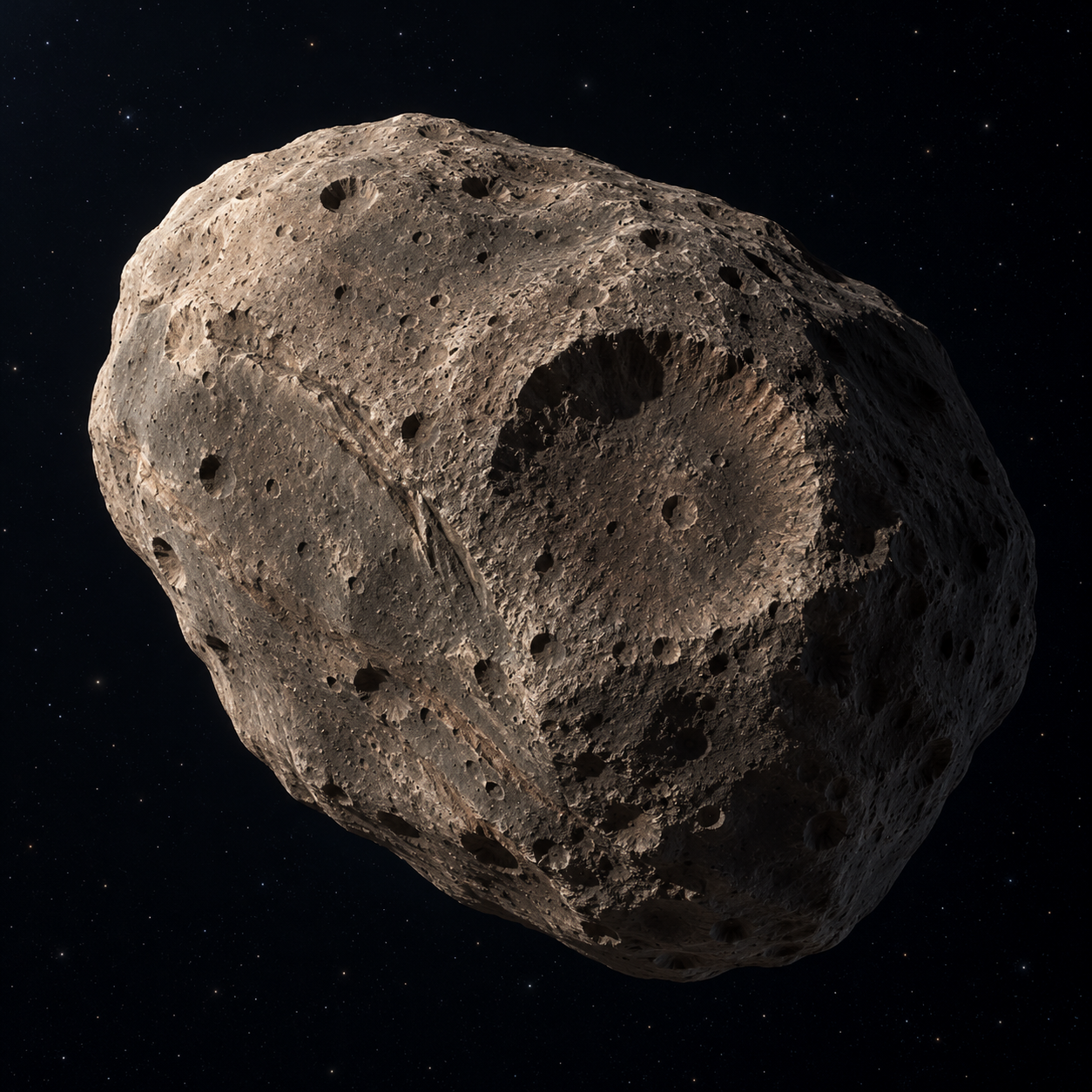
Phobos

Discover the larger Martian moon, whose close orbit carries it around Mars several times a day, then explore its place in the Solar System on the SPACE-di interactive map.

View Phobos in the 3D Solar System

Overview

Phobos is a moon of Mars, part of the Solar System in the universe. Mars is a planet associated with the Sun, our star, and this space encyclopedia describes the moon’s identity and place in its planetary system.

Phobos — A natural satellite of Mars. Its physical properties and orbital motion are shown from the available catalogue and ephemeris data.

No object-specific chemical/elemental dataset has been verified and imported for this record. This does not mean none is publicly available. Appearance may be imagined; chemistry is not.

Discovery and designation

Phobos was discovered in 1877. JPL credits A. Hall. The name and discovery entry identify this particular satellite of Mars; similarly named asteroids are separate objects.

Phobos is the larger of Mars' two moons. It orbits Mars three times a day, and is so close to the planet's surface that in some locations on Mars it cannot always be seen.

The largest feature on Phobos is Stickney crater.

Phobos is the larger of Mars' two moons and is 17 x 14 x 11 miles (27 by 22 by 18 kilometers) in diameter. It orbits Mars three times a day, and is so close to the planet's surface that in some locations on Mars it cannot always be seen.

Phobos was nearly shattered by a giant impact, and has gouges from thousands of meteorite impacts.

Phobos is on a collision course with Mars. It's nearing Mars at a rate of six feet (1.8 meters) every hundred years. At that rate, the moon will either crash into Mars in 50 million years or break up into a ring.

The most prominent feature on Phobos is Stickney Crater, which is named for Chloe Angeline Stickney Hall, mathematician and wife of astronomer Asaph Hall. Asaph Hall discovered both the Red Planet's moons in 1877.

Stickney crater is about 6-miles (9.7 kilometers) wide, and takes up about half the moon's surface. NASA Mars Global Surveyor took images of the crater, and it appears to be filled with fine dust, with evidence of boulders sliding down its sloped surface.

Phobos and Deimos appear to be composed of C-type rock, similar to blackish carbonaceous chondrite asteroids. Observations by Mars Global Surveyor indicate that the surface of this small body has been pounded into powder by eons of meteoroid impacts, some of which started landslides that left dark trails marking the steep slopes of giant craters.

Measurements of the day and night sides of Phobos show such extreme temperature variations that the sunlit side of the moon rivals a pleasant winter day in Chicago, while only a few kilometers away, on the dark side of the moon, the climate is more harsh than a night in Antarctica. High temperatures for Phobos were measured at 25 degrees Fahrenheit (-4 degrees Celsius) and lows at -170 degrees Fahrenheit (-112 degrees Celsius). This intense heat loss is likely a result of the fine dust on Phobos' surface, which is unable to retain heat.

Phobos has no atmosphere. It may be a captured asteroid, but some scientists show evidence that contradicts this theory.

Phobos was discovered on Aug. 17, 1877 by Asaph Hall. Hall named Mars' moons for the mythological sons of Ares, the Greek counterpart of the Roman god, Mars. Phobos means fear, and is the brother of Deimos.

NASA Selects Blue Origin as Mars Telecommunications Network Provider

NASA Tests Featherweight Radar Antenna for SkyFall Mars Helicopters

NASA’s Perseverance Rover Watches Earth Vanish Behind Martian Moon

NASA’s Curiosity Mars Rover Discovers Field of Honeycomb Textures

NASA’s MAVEN Illuminates New Understanding of Auroras at Mars

Mars is the fourth planet from the Sun, and the seventh largest. It’s the only planet we know of inhabited…

Mars is one of the most explored bodies in our solar system, and it's the only planet where we've sent…

Mars has two moons, Phobos and Deimos. Both are thought to be captured asteroids, or debris from early in the…

Deimos is the smaller of the two Martian moons and is less irregular in shape.

Key properties

Mean radius
11.08 km
Orbital period
0.3187 days

Exploration history

Mars Reconnaissance Orbiter and Mars Global Surveyor have imaged Phobos. Their observations reveal Stickney crater, a heavily impacted surface and slopes covered by loose material.

bottom of page