

Belinda
moon · Uranus · Belinda. A 1986 discovery in Uranus’s skies.
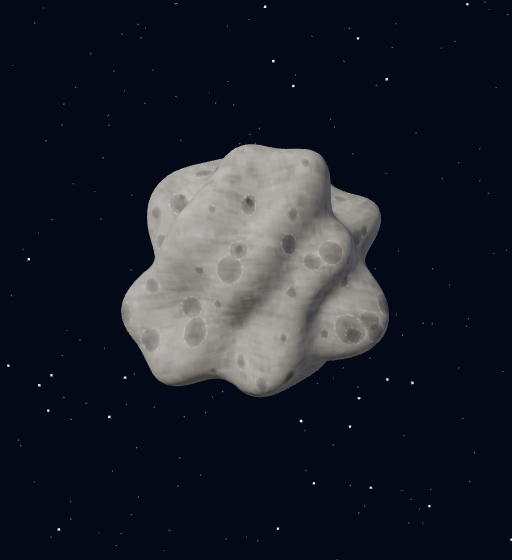
Discover Belinda, a moon of Uranus with an orbital semi-major axis of about 75,258 km, discovered in 1986, then explore its place in the Solar System on the SPACE-di interactive map.
View Belinda in the 3D Solar System
Overview
Belinda is a moon of Uranus, part of the Solar System in the universe. Uranus is a planet associated with the Sun, our star, and this space encyclopedia describes the moon’s identity and place in its planetary system.
Belinda — A natural satellite of Uranus. Its physical properties and orbital motion are shown from the available catalogue and ephemeris data.
No object-specific chemical/elemental dataset has been verified and imported for this record. This does not mean none is publicly available. Appearance may be imagined; chemistry is not.
Discovery and designation
Belinda was discovered in 1986. JPL credits Voyager Science Team. Its provisional designation is S/1986 U5. The name and discovery entry identify this particular satellite of Uranus; similarly named asteroids are separate objects.
Belinda was discovered on Jan. 13, 1986, in images taken by Voyager 2. It is one of the 10 Uranian satellites discovered by the Voyager science team.
Little is known about Belinda other than its size and orbital characteristics. Based on its low albedo, its surface probably consists of the dark, unprocessed, carbon-rich material found on the C-class of asteroids.
Originally called S/1986 U5, Belinda was named after the character whose lock of hair is stolen in Alexander Pope's "Rape of the Lock."
Key properties
- Orbital period
- 0.6236 days